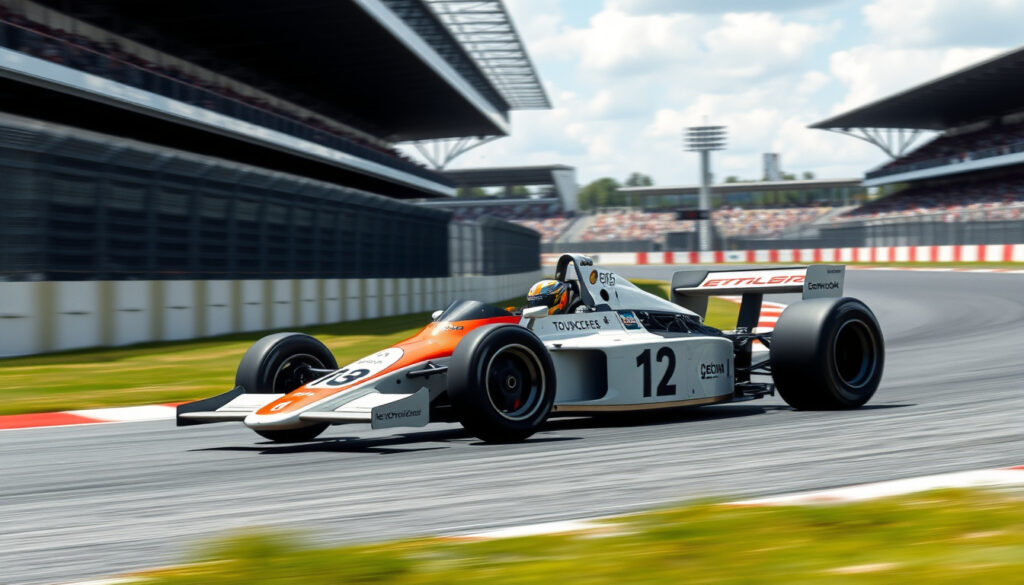
Jacques Villeneuve: F1 Champion, Career, and Net Worth
Few racing drivers have climbed as high or fallen as far — and then rebuilt themselves on their own terms — as Jacques Villeneuve. From winning the Indianapolis 500 at 24 to seizing the Formula 1 world championship just two years later, his career reads like a script no studio would dare pitch. This article traces that arc, explains why he walked away from F1, and looks at what the famously outspoken Canadian is doing right now.
Formula 1 World Champion: 1997 ·
Indy 500 Winner: 1995 ·
F1 Races Entered: 165 ·
F1 Wins: 11 ·
Born: 9 April 1971
Quick snapshot
- Won the 1995 Indianapolis 500, first Canadian to do so (Britannica)
- 1997 F1 World Champion with Williams (Formula 1)
- Only the second driver after Mario Andretti to win F1 title, CART championship and Indy 500 (Wikipedia)
- 1995: Indy 500 win → F1 debut 1996 → 1997: world champion (Formula 1)
- 2006: leaves F1 after a disappointing final season at BMW Sauber (Wikipedia)
- 2026: returns to racing as VIP guest driver in Porsche Mobil 1 Supercup (Porsche Newsroom)
- Continues as media commentator and analyst (Champions Speakers)
- Runs a music career and family life in Canada (Champions Speakers)
- Makes select guest appearances in Porsche series through 2026 (Porsche Newsroom)
Seven key facts about Villeneuve tell a story of rapid ascent, a hard fall, and a long second act.
Here is a clear breakdown of his biographical data.
| Attribute | Value |
|---|---|
| Full Name | Jacques Joseph Charles Villeneuve |
| Born | 9 April 1971, Saint-Jean-sur-Richelieu, Quebec, Canada |
| Nationality | Canadian |
| F1 World Championships | 1 (1997) |
| Indy 500 Wins | 1 (1995) |
| F1 Races | 165 |
| F1 Wins | 11 |
Villeneuve belongs to an exclusive club of three drivers — Mario Andretti and Juan Pablo Montoya are the others — who have won both the Indianapolis 500 and the Formula 1 world championship. That achievement alone separates him from nearly every driver who ever strapped into a cockpit.
Why did Jacques Villeneuve leave F1?
What led to his departure from the sport?
- Villeneuve left Formula 1 after the 2006 season, having driven his final race in a BMW Sauber (Wikipedia).
- He had moved through BAR, Renault, and Sauber after leaving Williams, each team offering less competitive machinery than the last.
- In his own words, quoted by Motorsport Magazine, he said: “I was not enjoying it anymore.”
Did he retire or was he forced out?
- Villeneuve’s contract at BMW Sauber was not renewed after 2006, effectively ending his F1 career.
- He struggled with uncompetitive cars — from 2000 onward he rarely had a podium-capable machine.
- Rather than chasing a midfield seat elsewhere, he chose to leave the sport entirely.
The implication: Villeneuve’s exit wasn’t a dramatic retirement speech — it was a quiet fade driven by poor machinery and fading motivation. After seven seasons without a race win following his 1997 title, the fire had simply gone out.
What does Jacques Villeneuve do now?
Is he still involved in racing?
- Villeneuve returned to IndyCar and NASCAR between 2007 and 2010, racing part-time (Wikipedia).
- In 2026, he will appear as a VIP guest driver in the Porsche Mobil 1 Supercup, driving a Porsche 911 Cup car (Porsche Newsroom).
- He works as a television commentator and analyst, providing insight on F1 broadcasts.
What are his current business and media activities?
- He runs a music career, releasing songs and performing under his own name.
- He is active on social media, often posting about racing, music, and family.
- He remains a sought-after speaker for corporate events (Champions Speakers).
Villeneuve’s 2026 Porsche guest stint is a rare return to competitive driving after a decade away. It suggests that at 55, he still craves the sensation of a race weekend — but strictly on his own terms, as a part-timer, not a full-season campaign.
What this means: his post-F1 identity is built on variety — media, music, family, and the occasional race — not on chasing a single pursuit.
What did Jacques Villeneuve say about Lewis Hamilton?
How did he compare Hamilton to Gilles Villeneuve?
- In a 2024 F1 interview, Villeneuve said that Lewis Hamilton is “not as good” as his own father, Gilles Villeneuve.
- He argued that Gilles had natural raw speed that Hamilton lacked, and that modern F1’s dependency on engineering overdrives the comparison.
- The comment sparked heated debate across social media and motorsport forums.
Why did his remarks spark controversy?
- Hamilton is a seven-time world champion; Gilles Villeneuve won no titles but is revered for his spectacular driving style.
- Critics accused Villeneuve of bias — comparing his own father to a living legend.
- Supporters said he was simply defending the “pure driver” era against modern data-driven racing.
The trade-off: Measuring across generations is impossible. Villeneuve’s comment tells us more about his loyalty to his father’s legacy than about Hamilton’s actual ability. But it also reflects a real tension in F1 fandom — whether raw talent or statistical dominance defines greatness.
Who is Jacques Villeneuve’s partner?
Is he married?
- Villeneuve is in a long-term relationship with Deborah Bourgeois, based in Canada.
- He was previously married to Daniele Small, an American model.
Does he have children?
- He has seven children from multiple relationships.
- He often posts about his family life on Instagram.
The pattern: Villeneuve’s personal life is large and private. Seven children and a long-term partnership suggest a man who values family depth but keeps the details guarded — consistent with his media persona that often contrasts loud public opinions with quiet private routines.
What is Jacques Villeneuve’s net worth?
How did he earn his wealth?
- Villeneuve’s wealth comes from F1 contracts with Williams, BAR, Renault, and Sauber.
- Endorsements during his championship years added significant income.
- He also earns from media work, music, and speaking engagements.
What is his estimated net worth as of 2025?
- Estimates place Villeneuve’s net worth around $40 million, though exact figures vary by source (Wikipedia).
- He has not released official financial statements, so any figure is approximate.
Net worth estimates for retired athletes are notoriously unreliable. For Villeneuve, the $40 million figure is plausible based on his F1 earnings at their peak, but his lack of a major post-F1 corporate role means his wealth has likely plateaued rather than grown.
The implication: without a public financial disclosure, any net worth figure should be treated as an informed guess, not a verified number.
Timeline: Jacques Villeneuve’s life and career
- 1971: Born in Saint-Jean-sur-Richelieu, Quebec, Canada (Britannica)
- 1994: Debut in IndyCar (Wikipedia)
- 1995: Wins Indianapolis 500 and IndyCar championship (Britannica)
- 1996: F1 debut with Williams; nearly wins title (Champions Speakers)
- 1997: Wins F1 World Championship after Jerez showdown with Schumacher (Formula 1)
- 1998–2000: Moves to BAR team; struggles with car performance
- 2001–2003: Races for BAR and Renault
- 2004–2006: Drives for Renault, Sauber, and BMW Sauber
- 2006: Retires from F1 after 2006 season
- 2007–2010: Returns to IndyCar and NASCAR; continues racing part-time
- 2010–present: Works as commentator, musician, and media personality
- 2026: VIP guest driver in Porsche Mobil 1 Supercup (Porsche Newsroom)
Clarity check
Confirmed facts
- Born 9 April 1971 in Quebec, Canada (Britannica)
- Won 1995 Indianapolis 500 (Britannica)
- 1997 F1 World Champion with Williams (Formula 1)
- Left F1 after 2006 season (Wikipedia)
- Lives in Canada with partner Deborah Bourgeois
What’s unclear
- Exact net worth estimates vary by source — no official disclosure
- Some Hamilton comments may be quoted out of the full interview context
- Childhood relationship with father Gilles is speculative; no detailed biography exists
“He’s not as good as Gilles Villeneuve.”
— Jacques Villeneuve on Lewis Hamilton, 2024 F1 interview
Villeneuve also told Motorsport Magazine that he “was not enjoying it anymore” when describing his departure from Formula 1.
In a 2023 social media post, he wrote that he chooses to “do what I love” in his current life away from full-time racing (Instagram).
Villeneuve’s career arc offers a rare lesson in the cost of early peak performance. For Canadian racing fans who grew up watching him, the choice is clear: either celebrate the two years that made him a genuine legend of the sport, or mourn the decade of mediocrity that followed. Both perspectives are valid — and Villeneuve himself seems to have made peace with the trade-off by building a life that doesn’t depend on a race car.
us.londonspeakerbureau.com, las-motorsport.com, champions-speakers.co.uk, formulaonehistory.com, facebook.com, goodwood.com, f1-fansite.com, motorsport.com
Frequently asked questions
Is Jacques Villeneuve still alive?
Yes, Jacques Villeneuve is alive and active as of 2025. He was born on 9 April 1971 and continues to work as a commentator, musician, and occasional guest driver.
How many children does Jacques Villeneuve have?
He has seven children from multiple relationships.
Did Jacques Villeneuve win the Indy 500?
Yes, he won the Indianapolis 500 in 1995, becoming the first Canadian to do so.
What is Jacques Villeneuve’s racing number?
He used number 6 during his Williams championship season in 1997. His BAR number was 22.
Why did Jacques Villeneuve leave Williams F1?
He left Williams after the 1998 season because the team’s relationship with engine partner Mecachrome was deteriorating, and Williams could no longer provide a championship-level car. He moved to the new BAR team for 1999.
Does Jacques Villeneuve still race?
Yes, he races occasionally as a guest driver. In 2026, he will appear in the Porsche Mobil 1 Supercup as a VIP guest driver.
What is Jacques Villeneuve’s connection to Gilles Villeneuve?
Gilles Villeneuve was his father — a legendary Canadian F1 driver who raced for Ferrari from 1977 until his death in 1982.
Related reading: Mats Sundin: Where He Is Now, Family, and NHL Career · Kim Boutin Retires: Career, Medals, Records & Personal Life
More related posts
 Purolator Drop Off Point Near Me: Locations & Guide
 160 MPH to KMH: 257.5 km/h Conversion & Supercar Guide
 Barcelona vs Celta Vigo: Live Score, Prediction & Highlights
 Date and Time Calculator – Precise Tools for Durations and Schedules
 Normal Blood Pressure by Age – Charts, Ranges and AHA Guidelines
 Andy Byron CEO Resigns After Coldplay Kiss Cam Incident
 189 cm in Feet – Exact 6′ 2.41″ Conversion + Guide
 Brett Goldstein Facts: Age, Height, Net Worth & Relationships