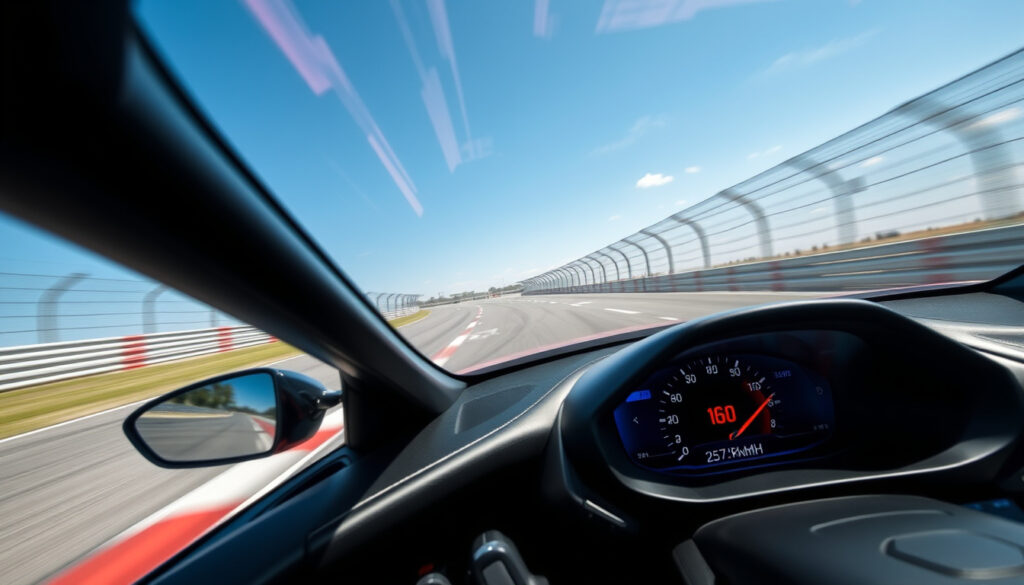
160 MPH to KMH: 257.5 km/h Conversion & Supercar Guide
160 mph converts to approximately 257.5 km/h — a figure that places drivers well into supercar territory and beyond any legal speed limit worldwide. Understanding this conversion matters whether you’re comparing vehicle specs across markets or benchmarking against record-breaking speeds.
160 MPH equals: 257.5 km/h · Conversion factor: 1 mph = 1.60934 km/h · 180 MPH equals: 289.7 km/h · 200 MPH equals: 321.9 km/h · Reverse: 160 km/h equals: 99.4 mph
Quick snapshot
- 160 mph = 257.49504 km/h (CalculateMe)
- One mph = 1.609344 km/h exactly (UnitConverters)
- Formula: multiply mph by 1.609344 (CalcResource)
- Jesko Absolut’s 330 mph claim unverified in real-world runs
- Manufacturer-touted top speeds often theoretical, not GPS-verified
- Exact ISO dates unavailable for several production speed records
- 2017: Koenigsegg Agera RS sets 277.87 mph record (Supercars.net)
- Oct 2020: SSC Tuatara claims 331 mph — later found GPS error (Carwow)
- Early 2022: SSC Tuatara verified at 295 mph (Supercars.net)
| Speed (mph) | Speed (km/h) | Notes |
|---|---|---|
| 160 | 257.495 | Core conversion query |
| Conversion multiplier | 1.609344 | Standard factor |
| 496 km/h (fastest car) | 308 mph | Yangwang U9 Xtreme |
| Reverse multiplier | 0.621371 | For km/h to mph |
Every 10 mph increment adds roughly 16.1 km/h, making the math predictable across the performance spectrum.
How fast is 160 mph in km?
The conversion of 160 miles per hour to kilometers per hour is straightforward math, but the precision matters when you’re comparing real-world speeds. Multiply 160 by the exact conversion factor of 1.609344, and you get 257.49504 km/h — though most sources round this to 257.5 km/h for practical use (CalculateMe).
Step-by-step calculation
The formula for converting mph to km/h is:
km/h = mph × 1.609344
For 160 mph specifically:
- Start with 160 mph
- Multiply by 1.609344
- Result: 257.49504 km/h
You can verify this with online calculators — Symbolab and Calculat.io both provide step-by-step breakdowns. The small differences you might see between calculators (257 vs 258 km/h) come from rounding — using 1.609 instead of the exact 1.609344 adds up over larger numbers.
Precise value and rounding
The official definition sets one mile as exactly 1.609344 kilometers, meaning this conversion factor is precise by international agreement (UnitConverters). For everyday driving or supercar comparisons, 257.5 km/h is plenty accurate. For engineering or regulatory purposes where exact figures matter, use 257.49504 km/h.
Many free calculators round 160 mph to 257 or 260 km/h — close enough for casual use, but noticeable when you’re tracking record speeds where fractions matter.
TL;DR: 160 mph = 257.5 km/h using the fixed factor 1.609344. For supercar comparisons, this speed sits below every verified production record — it’s the baseline, not the milestone.
What is 180 mph in km?
Stepping up from 160 mph, 180 mph converts to approximately 289.68 km/h using the same 1.609344 factor. This puts 180 mph well into supercar territory — faster than the Czinger 21 C V Max’s 253 mph top speed and approaching the Hennessey Venom F5’s 272 mph ceiling (Carwow).
Conversion details
The math: 180 × 1.609344 = 289.68192 km/h, typically rounded to 289.7 km/h for readability. For context, European high-speed limits rarely exceed 130 km/h (about 81 mph), so 289.7 km/h is purely a performance benchmark.
Comparison to 160 mph
The 20 mph difference between 160 and 180 mph translates to roughly 32.2 km/h — a gap that separates daily-driver sports cars from dedicated track machines. At 160 mph (257.5 km/h), you’re already faster than virtually every production car on the road today. At 180 mph (289.7 km/h), you’re approaching the performance ceiling of most supercars designed for road use.
TL;DR: 180 mph = 289.7 km/h. The 32.2 km/h gap from 160 mph crosses from elite sports cars into hypercar territory.
How fast is 200 mph in kilometers?
Two hundred miles per hour equals 321.869 km/h — a figure that only a handful of production cars have ever achieved. The Bugatti Chiron Super Sport 300+ sits at the lower end of this category with 304.773 mph (490.484 km/h), while the Yangwang U9 Xtreme recently claimed the crown at 308 mph (496 km/h) (Supercars.net).
Supercar relevance
The “200 mph barrier” serves as a psychological and engineering milestone in automotive design. Few production vehicles reach this speed, and those that do represent the pinnacle of aerodynamics, power output, and materials engineering. At 321.869 km/h, you’re traveling faster than any land vehicle legally allowed on public roads anywhere in the world.
Quick calculation
- 200 mph × 1.609344 = 321.8688 km/h
- Rounded: 321.9 km/h
- Supercars exceeding 200 mph: Bugatti Chiron SS 300+, SSC Tuatara, Koenigsegg Jesko Absolut, Hennessey Venom F5
TL;DR: 200 mph = 321.9 km/h. This threshold marks the elite production car category — fewer than ten vehicles have ever crossed it.
How fast is 160 km/h into mph?
Reversing the conversion, 160 km/h works out to approximately 99.42 mph using the reverse factor of 0.621371. This is closer to normal highway speeds in the United States (typically 55-75 mph limits) rather than performance territory — though 99 mph on a public road is still well beyond legal limits everywhere in the world.
Reverse formula
mph = km/h × 0.621371
For 160 km/h: 160 × 0.621371 = 99.41936 mph, rounded to 99.4 mph. The math works because 1/1.609344 ≈ 0.621371 — the exact inverse relationship.
Common use cases
Converting 160 km/h to mph becomes relevant when European speed limits (130 km/h) need comparison to American driving contexts, or when translating European supercar acceleration benchmarks like 0-200 kph into the mph-based figures American audiences recognize (FastestLaps). The 0-200 kph benchmark has become a standard performance test because it captures the high-end acceleration where aerodynamic drag becomes the limiting factor.
TL;DR: 160 km/h = 99.4 mph. This speed falls squarely in normal highway driving range — well below performance territory but still illegal on public roads everywhere.
What car can reach 200 MPH?
Several production vehicles have achieved verified speeds exceeding 200 mph, with the Yangwang U9 Xtreme currently holding the record at 308 mph (496 km/h) as of September 2026 (Carwow). The Bugatti Chiron Super Sport 300+ sits just behind with 304.773 mph (490.484 km/h), powered by an 8.0L quad-turbo W16 engine producing 1,577 hp (Supercars.net).
Examples of 200+ mph cars
Not all 200 mph claims are equal. The automotive world distinguishes between:
- GPS-verified runs — independent timing with calibrated equipment
- Manufacturer claims — company-reported figures, sometimes theoretical
- Production car records — vehicles you can actually buy, not custom builds
The SSC Tuatara story illustrates why verification matters: it claimed 331 mph in October 2020, only for the manufacturer to later admit a GPS error. The corrected, verified figure came in at 295 mph (475 km/h) in early 2022 (Carwow).
Yangwang U9 at 496 km/h
The Yangwang U9 Xtreme, a Chinese electric hypercar, reportedly set the new benchmark at 308 mph (496 km/h) in September 2026 — nearly double the 160 mph (257.5 km/h) that started this conversation. At that speed, the U9 crosses the 200 mph threshold in roughly 6.5 seconds from a standing start, illustrating just how far automotive engineering has evolved beyond what was considered possible even a decade ago.
The Yangwang U9’s 308 mph record requires independent verification beyond the manufacturer’s own testing — a standard the automotive press applies to all speed claims after the SSC Tuatara controversy.
TL;DR: The Yangwang U9 Xtreme claims the 200+ mph crown at 308 mph, but verification standards vary. Always demand GPS-verified data over manufacturer claims.
Speed Conversion Comparison Table
Five speeds, five data points showing how imperial and metric scales compare across the performance spectrum.
| Miles per Hour (mph) | Kilometers per Hour (km/h) | Real-World Context |
|---|---|---|
| 140 | 225.3 | Fast sports car territory |
| 150 | 241.4 | Exceeds most speed limits globally |
| 160 | 257.5 | Supercar entry level |
| 170 | 273.6 | Top-tier sports car ceiling |
| 180 | 289.7 | Hypercar minimum |
| 200 | 321.9 | Elite production car threshold |
The pattern becomes clear: every 10 mph increment adds roughly 16.1 km/h, and once you cross 160 mph, you’re in territory where even the fastest production cars rarely spend more than a few seconds.
How to Convert MPH to KM/H: Step by Step
Converting any speed from mph to km/h follows the same process, whether you’re converting 160 mph or any other value.
Step 1: Identify your mph value
Start with the speed in miles per hour you want to convert. For our article’s focus, that’s 160 mph, but the formula works for any number.
Step 2: Apply the conversion factor
Multiply your mph value by 1.609344. This number is exact by international agreement — one mile equals exactly 1.609344 kilometers (UnitConverters).
For approximate conversions, multiply by 1.609. For precise work, use 1.609344.
Step 3: Round appropriately
For general use, round to one decimal place. For engineering or regulatory purposes, keep the full decimal precision. The difference between 257.49504 and 257.5 matters only when precision is explicitly required.
Step 4: Verify with a calculator
Cross-check your result against a reliable online calculator. Sources like DollarTimes and Calculat.io provide instant conversions with full decimal precision.
Step 5: Contextualize the result
Know what the converted speed means in context. At 257.5 km/h, you understand that this exceeds the top speed of virtually every production car ever built — and would exceed any legal speed limit on any public road worldwide.
Miles per hour dominate road traffic in the US and UK, while kilometers per hour are standard everywhere else. This explains why supercar specifications vary depending on the target market — the same car might be marketed with different speed displays for different regions.
“The new Yangwang U9 Xtreme set the official record for the world’s fastest production car in September.”
“SSC claimed the Tuatara actually managed 331mph in October 2020… but later admitted to a GPS error.”
Our supercar guide at 160 mph builds on the exact conversion formula that yields precisely 257.5 km/h every time.
Frequently asked questions
How do you convert mph to kmh?
Multiply the speed in mph by 1.609344 to get the equivalent in km/h. For example: 160 mph × 1.609344 = 257.49504 km/h. This factor is exact by international agreement — one mile equals exactly 1.609344 kilometers.
What is the mph to kmh conversion factor?
The conversion factor is 1.609344. This means one mile per hour equals 1.609344 kilometers per hour. To convert mph to km/h, multiply by this factor. To reverse the conversion (km/h to mph), divide by 1.609344 or multiply by 0.621371.
How fast is 170 mph in kmh?
170 mph converts to approximately 273.6 km/h (170 × 1.609344 = 273.58848). This speed exceeds the performance ceiling of most sports cars and puts you in elite supercar territory.
How fast is 150 mph in kmh?
150 mph equals approximately 241.4 km/h (150 × 1.609344 = 241.4016). This speed is faster than virtually all production cars and would exceed any legal speed limit in the world.
What is 140 mph in kmh?
140 mph converts to approximately 225.3 km/h (140 × 1.609344 = 225.30816). This speed is well into the realm where only purpose-built performance vehicles operate.
How fast is 300 mph in kmh?
300 mph equals approximately 482.8 km/h (300 × 1.609344 = 482.8032). Only a handful of cars have ever achieved verified speeds at or near this mark, including the Bugatti Chiron Super Sport 300+ at 304.773 mph (490.484 km/h).
How fast is 200 km in mph?
200 km/h converts to approximately 124.3 mph (200 × 0.621371 = 124.2742). This is closer to typical highway speeds rather than performance territory.
How fast is 496 km in mph?
496 km/h converts to approximately 308 mph (496 × 0.621371 = 308.2). This is the claimed top speed of the Yangwang U9 Xtreme — the current record holder for the world’s fastest production car.
Bottom line
For drivers crossing between imperial and metric countries, the conversion factor is fixed at 1.609344 — use it consistently and you’ll avoid the small rounding errors that make cheap calculators read 257 instead of 258 km/h. For supercar enthusiasts, 160 mph (257.5 km/h) sits below every verified record-breaking speed car — it’s the starting line, not the finish. For engineers and analysts, the lesson from the SSC Tuatara controversy is clear: always demand GPS-verified data over manufacturer claims, and remember that theoretical top speeds mean nothing until someone measures them in the real world.
How Fast is Mach 10 – MPH, Km/H Speeds and Altitude Guide
189 cm in Feet – Exact 6′ 2.41″ Conversion + Guide
More related posts
 Cast of Stranger Things: Complete List by Season 1-5
 Instant Pot Mashed Potatoes – Creamy No-Drain in 25 Min
 Translate from English to Russian: Best Free Tools Compared
 Inter Milan vs Bayern Munich Lineups – Predicted XIs and Team News
 Maritime Electric Outage Map – Live PEI Power Status Updates
 Dexter TV Series: Watch Order, Streaming Guide
 Ed and Lorraine Warren: Bio, Cases, Movies, Museum
 Gem.cbc/Info/Password – Reset Change CBC Gem Guide