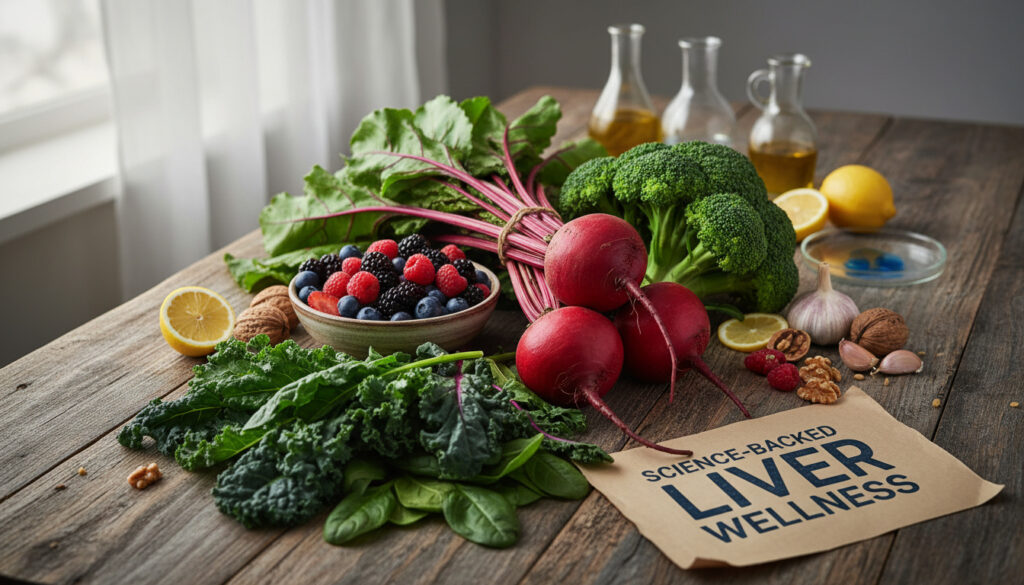
What Is the Best Liver Food – Top Science-Backed Choices
Optimal liver health depends on whole, nutrient-dense foods rich in fiber, polyphenols, and anti-inflammatory compounds. Scientific evidence increasingly supports specific dietary choices for preventing and managing metabolic dysfunction-associated steatotic liver disease (MASLD), formerly known as NAFLD.
Research published in peer-reviewed journals identifies fatty fish, leafy greens, cruciferous vegetables, and coffee as particularly beneficial. These foods contain bioactive compounds that reduce oxidative stress, activate detoxification enzymes, and limit fat accumulation in hepatic tissue.
Understanding which nutrients support hepatoprotection requires examining the mechanisms behind omega-3 fatty acids, glucosinolates, and antioxidant phytochemicals. The following analysis breaks down evidence-based recommendations for incorporating liver-supportive foods into daily nutrition.
What Are the Best Foods for Liver Health?
- Meta-analysis data links coffee consumption to significantly lower cirrhosis risk compared to non-consumers.
- Walnuts deliver plant-based omega-3s specifically beneficial for reducing hepatic fat accumulation.
- Cruciferous vegetables boost phase II detoxification enzyme activity through glucosinolate compounds.
- Berries provide anthocyanins that protect hepatocytes from oxidative damage and improve insulin sensitivity.
- Beets contain betaine supporting methylation pathways essential for liver detoxification processes.
- Green tea catechins demonstrate measurable reductions in hepatic fat deposits in clinical observations.
- Mediterranean dietary patterns consistently show benefits for MASLD prevention across longitudinal studies.
| Food Category | Primary Hepatic Benefit | Bioactive Compound | Evidence Source |
|---|---|---|---|
| Fatty Fish | Reduces inflammation, prevents fat buildup | Omega-3 fatty acids (EPA/DHA) | Nutrients Journal |
| Coffee | Prevents fibrosis, lowers inflammation | Caffeine, chlorogenic acids | Summit Health |
| Broccoli | Enhances detoxification enzyme activity | Glucosinolates | Foods 2025 Review |
| Blueberries | Antioxidant protection, reduces oxidative stress | Anthocyanins, polyphenols | BMC Complementary Medicine |
| Walnuts | Improves lipid metabolism | Vitamin E, ALA (omega-3) | Harvard Health |
| Beets | Supports detoxification pathways | Betaine | Summit Health |
| Green Tea | Reduces hepatic fat deposits | Catechins (EGCG) | Clinical Observations |
| Garlic | Activates detox enzymes | Sulfur compounds, selenium | Summit Health |
Which Foods Help Repair and Detox the Liver?
Omega-3 Rich Seafood and Hepatic Repair
Fatty fish deliver concentrated doses of omega-3 fatty acids that actively reduce hepatic inflammation and prevent lipid accumulation. Research published in Nutrients confirms that consuming two or more servings of oily fish weekly produces beneficial effects on serum lipids and reduces hepatic steatosis markers in patients with MASLD.
Chilean salmon specifically offers high omega-3 content while maintaining low mercury levels, making it a preferred source for regular consumption. The anti-inflammatory properties of EPA and DHA directly counteract the cellular stress that characterizes fatty liver disease progression.
Cruciferous Vegetables and Enzyme Activation
Broccoli, Brussels sprouts, and cauliflower contain glucosinolates that promote liver detoxifying enzyme activity. A 2025 review in Foods identified these compounds as offering anti-cancer, anti-inflammatory, and cardioprotective effects specifically beneficial for hepatic function.
Studies suggest broccoli consumption helps protect against MASLD by preventing fat buildup in liver cells through mechanisms involving enhanced phase II detoxification pathways.
Beets contain high concentrations of betaine, a methylating agent that supports phase II liver detoxification and reduces oxidative stress in hepatocytes. This compound assists the liver’s natural cleansing processes without requiring specialized supplements.
Are Coffee, Eggs, Fruits, and Vegetables Good for the Liver?
Coffee and Hepatoprotection
Strong scientific evidence supports regular coffee consumption for liver protection. Studies demonstrate that coffee reduces hepatic fat buildup, lowers inflammation markers, and helps prevent liver fibrosis—the excessive scarring that impairs organ function.
Regular filtered, unsweetened coffee correlates with the most beneficial liver health outcomes. Both caffeinated and decaffeinated varieties provide protective effects, though two to three daily cups show the strongest clinical associations with reduced fibrosis risk.
Berry Polyphenols and Cellular Defense
Blueberries, cranberries, and raspberries contain anthocyanins that shield liver cells from oxidative damage. Research in BMC Complementary Medicine and Therapies found that cranberries specifically reduce hepatic fat buildup in NAFLD patients while improving insulin resistance markers.
Leafy Greens and Heavy Metal Chelation
Spinach, kale, and arugula provide chlorophyll and glutathione—antioxidants that neutralize toxins and protect hepatocytes. WebMD hepatology resources note that chlorophyll specifically binds to heavy metals, reducing their toxicity and supporting the organ’s natural filtration systems.
Maintaining cardiovascular health alongside liver function creates synergistic metabolic benefits. Monitoring vascular markers provides insight into overall metabolic syndrome risk factors that often coexist with hepatic steatosis. Normal Blood Pressure by Age – Charts, Ranges and AHA Guidelines offers reference data for assessing cardiometabolic health status.
What Foods Should You Avoid to Protect Your Liver?
While emphasizing hepatoprotective foods remains essential, understanding dietary hazards proves equally critical for preventing MASLD progression. Houston Methodist clinical guidelines indicate that excessive intake of added sugars, particularly fructose, drives hepatic fat accumulation more aggressively than dietary fats alone.
Processed foods containing trans fats and high sodium levels increase inflammatory markers that stress liver function. Alcohol consumption remains the most widely recognized hepatotoxin, though emerging data suggests sugar-sweetened beverages may rival alcohol’s impact on hepatic steatosis development in certain populations.
Nuts provide essential vitamin E and omega-3s for liver health, yet remain calorie-dense. Excessive consumption can contribute to weight gain, counteracting their hepatoprotective benefits. Recommended portions range from one to two ounces daily to maximize nutritional advantages without metabolic strain. For more information on kohlrabi recipes, check out this Recept amb col-i-rave senzill i ràpid.
How Has Liver Nutrition Science Evolved?
- : Epidemiologists first observe inverse correlations between coffee consumption and liver disease mortality in Scandinavian populations.
- : Randomized controlled trials validate antioxidant-rich dietary patterns for improving hepatic enzyme profiles in NAFLD patients.
- : Omega-3 fatty acid supplementation receives clinical validation for reducing hepatic steatosis measurable via imaging studies.
- : MASLD nomenclature replaces NAFLD, shifting focus toward metabolic dysfunction etiology and personalized dietary interventions.
- : Current research emphasizes the gut-liver axis, polyphenol bioavailability, and Mediterranean diet protocols for steatotic liver disease management.
What Is Proven Versus Uncertain in Liver Nutrition?
| Established Through Clinical Trials | Emerging or Insufficient Evidence |
|---|---|
| Coffee reduces fibrosis risk (multiple meta-analyses) | Turmeric/curcumin efficacy limited by bioavailability challenges |
| Fatty fish improve lipid profiles (RCTs) | Vitamin E dosage protocols remain debated for MASLD treatment |
| Cruciferous vegetables enhance detox enzymes | Commercial “detox” teas show no clinical efficacy in liver cleansing |
| Mediterranean patterns prevent steatosis | Specific probiotic strains for liver health require further validation |
How Does Diet Impact Overall Liver Function?
The liver processes approximately 1.5 liters of blood per minute, filtering toxins, synthesizing proteins, and regulating glucose storage. VCU Liver Institute research identifies dietary patterns as the primary modifiable risk factor for MASLD, which now affects approximately 38% of adults globally.
Harvard Health analysis emphasizes that preventable liver disease is rising alongside obesity rates, with dietary composition—not merely caloric quantity—determining hepatic outcomes. Diets high in monounsaturated fats from olive oil and avocados, combined with omega-3 sources like walnuts and fatty fish, demonstrate the strongest protective associations.
Preparing whole foods at home supports portion control and ingredient quality. Simple recipes emphasizing steamed vegetables and lean proteins accommodate busy schedules while delivering hepatoprotective nutrients. Instant Pot Mashed Potatoes – Creamy No-Drain in 25 Min demonstrates how convenient cooking methods can incorporate liver-friendly ingredients like garlic and olive oil into daily meals.
What Do Leading Health Authorities Say About Liver Foods?
Diet represents first-line therapy for NAFLD and MASLD management, with specific macronutrient compositions showing measurable impact on hepatic steatosis resolution.
— National Institutes of Health (NIH) Hepatology Guidelines
Beets support phase II detoxification pathways through betaine-mediated methylation reactions, providing foundational support for the liver’s intrinsic cleansing mechanisms.
— Registered Dietitian Clinical Review, Summit Health
Most adults receive only half their daily fiber requirements, yet achieving 20 to 40 grams through vegetables, fruits, and legumes significantly improves glycemic regulation and hepatic function.
— Houston Methodist Clinical Nutrition Department
Key Takeaways on the Best Foods for Liver Health
Scientific evidence consistently supports consuming fatty fish, coffee, cruciferous vegetables, berries, and nuts for optimal hepatic function. These foods deliver specific bioactive compounds—omega-3 fatty acids, glucosinolates, anthocyanins, and polyphenols—that reduce inflammation, enhance detoxification, and prevent fibrosis. Combining these ingredients within a Mediterranean dietary pattern while minimizing processed sugars and excessive calories provides the most robust protection against MASLD and related metabolic conditions. Instant Pot Mashed Potatoes – Creamy No-Drain in 25 Min offers a practical example of integrating garlic and healthy preparation methods into everyday cooking.
Frequently Asked Questions
Can fatty liver disease be reversed through dietary changes alone?
Research indicates that MASLD can improve significantly with dietary intervention, particularly Mediterranean-style patterns. Weight loss of 5-10% often reduces hepatic steatosis substantially without requiring pharmaceutical intervention.
What daily coffee intake provides measurable liver protection?
Studies suggest two to three cups of filtered, unsweetened coffee daily correlate with reduced fibrosis risk. Both regular and decaffeinated varieties show hepatoprotective effects in clinical observations.
Are eggs beneficial or harmful for liver health?
Eggs provide high-quality protein essential for liver repair, delivering choline that supports fat metabolism in hepatic tissue. They align with recommendations for approximately 1 gram of protein per kilogram body weight daily.
Which beverages should be avoided beyond alcohol?
Sugary beverages containing high-fructose corn syrup contribute significantly to hepatic fat accumulation. Research emphasizes limiting added sugars rather than focusing exclusively on alcohol elimination.
Do commercial liver detox supplements deliver clinical benefits?
No clinical evidence supports commercial “detox” teas or supplements for liver cleansing. The liver possesses intrinsic detoxification pathways; specific foods support these natural mechanisms, but external cleansing products lack scientific validation.
Is there a single most effective food for liver repair?
No single food provides complete hepatoprotection. Fatty fish, coffee, and cruciferous vegetables demonstrate the strongest individual evidence, yet synergistic dietary patterns prove more effective than isolated superfoods.
More related posts
 Taxes Due 2025 Canada: Key Filing and Payment Deadlines
 Ottawa Police Service Names Release Criteria – When Names Go Public
 Our Lady of Guadalupe – History, Tilma Miracle and Significance
 You’re Welcome in French – Casual and Formal Responses Guide
 Little Grouse on the Prairie – Identification, Habitat & Conservation
 Ath. Bilbao – Real Madrid – Rodrygo Brace Secures 2-0 Win
 Eva Longoria Movies and TV Shows – Complete Filmography and Best Roles
 Tracy Chapman Fast Car Lyrics: Meaning & Queer Story