Notorious B.I.G. Murder: How Many Times Was He Shot? Facts
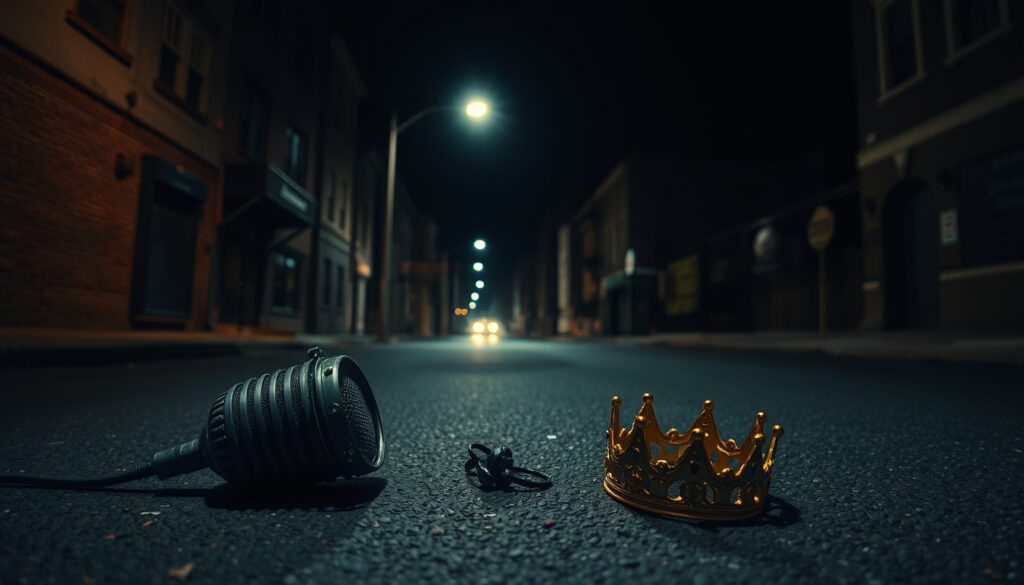
There are few stories in music history as layered as that of Christopher Wallace—better known as the Notorious B.I.G., twenty-eight years after a drive-by shooting cut his life short at age 24, the case remains officially unsolved, while his estate continues to generate millions annually. Here’s what’s actually known about the murder, the feud with Tupac Shakur, the financial legacy his children inherited, and the questions that still have no answers.
Born: May 21, 1972 ·
Died: March 9, 1997 ·
Shots fired: 4 ·
Estate value: $10 million ·
Children: 2 ·
Studio albums: 2
Quick snapshot
- Biggie was shot four times (ABC News)
- He died on March 9, 1997 in Los Angeles (Wikipedia)
- Estate valued at $10 million at death (Forbes)
- He had two children: T’yanna and Christopher Jr. (Celebrity Net Worth)
- Who ordered the murder remains unknown (ABC News) (Wikipedia)
- Whether Diddy ever paid all owed royalties is disputed (Wikipedia) (Wikipedia)
- What exactly was in Biggie’s pocket (reportedly a BMW key) is not universally confirmed (Wikipedia)
- The exact value of Biggie’s estate at death is disputed, with estimates ranging from $10 million to $100 million (Wikipedia)
Eight facts that define the Notorious B.I.G.’s story, from birth to posthumous earnings.
| Field | Details |
|---|---|
| Real name | Christopher George Latore Wallace |
| Stage names | The Notorious B.I.G., Biggie Smalls, Frank White |
| Born | May 21, 1972, Brooklyn, New York |
| Died | March 9, 1997, Los Angeles, California |
| Cause of death | Drive-by shooting (4 gunshot wounds) |
| Number of studio albums | 2 (Ready to Die, Life After Death) |
| Children | T’yanna Wallace (b. 1993), Christopher Jordan Wallace (b. 1996) |
| Estate value at death | Approximately $10 million |
For music fans and true-crime followers alike, Biggie’s case represents a rare instance where a celebrity death remains both culturally resonant and legally unresolved. The estate’s continued financial growth—$80 million in 2025 earnings per Forbes—means the commercial legacy outlives the official investigation.
How many times was Biggie shot?
The shooting that killed Christopher Wallace involved four shots fired from a stopped vehicle at a traffic light in Los Angeles. According to ABC News, the attack occurred shortly after he left a music industry event following the 1997 Soul Train Music Awards. He was riding in the front passenger seat of a GMC Suburban when a black Chevrolet Impala pulled up alongside.
Where did the shooting happen?
- The murder took place at the intersection of Wilshire Boulevard and South Fairfax Avenue in Los Angeles, California.
- Biggie was part of a three-car caravan leaving the Petersen Automotive Museum.
- According to Casepin, the car carrying Biggie stopped at a red light when the shooter’s vehicle pulled alongside and opened fire.
What were the circumstances of the murder?
- Biggie was pronounced dead at 1:15 a.m. on March 9, 1997, at Cedars-Sinai Medical Center, according to Wikipedia.
- The coroner later reported that a single bullet caused the fatal injuries, despite multiple shots being fired. CBC News covered the 2012 release of the long-sealed autopsy report.
- The case remains unsolved as of major media summaries. The FBI opened and later closed a civil-rights/color-of-law investigation in 2005, documented in the FBI Vault.
Despite four bullets fired, only one was fatal—a detail that forensic experts and true-crime followers still analyze. The medical finding doesn’t change the larger frustration: 28 years later, no one has been convicted for those shots.
The implication: What looks like a straightforward drive-by attack becomes less clear with every layer. The single fatal bullet, the absence of witnesses willing to testify, and the closed FBI file all point to a case where the evidence exists but the answers don’t.
Why did Tupac start hating Biggie?
The East Coast-West Coast feud that defined mid-90s hip hop had a specific ignition point: the November 1994 shooting of Tupac Shakur at Quad Studios in New York City. Tupac believed Biggie and Sean “Diddy” Combs had prior knowledge of the attack—a claim both men denied.
How did the East Coast-West Coast feud begin?
- Tupac was shot five times and robbed in the lobby of Quad Studios on November 30, 1994. According to CAAM, media accounts have long linked the killing to the East Coast-West Coast rap rivalry.
- Biggie was in the same building recording at the time, and Tupac publicly accused Biggie and Diddy of being involved.
- The feud escalated through diss tracks, public taunts, and a growing personal animosity that neither camp tried to de-escalate.
What role did the media play?
- Hip-hop magazines and news outlets amplified the rivalry, framing it as a coast-against-coast war.
- The coverage increased album sales for both artists but also created a climate where violence seemed like the expected next chapter.
The pattern: What began as a personal suspicion—Tupac’s belief that Biggie knew about the Quad Studios attack—became a media narrative that neither artist could fully control. The personal grievance and the commercial incentive to keep the feud going created a cycle that ended in two murders.
Did Diddy ever pay Biggie?
Sean “Diddy” Combs was Biggie’s manager and the head of Bad Boy Records, the label that released both of Biggie’s studio albums. The financial relationship between the two men has been a subject of dispute for decades.
What was the financial arrangement between Diddy and Biggie?
- Diddy signed Biggie to Uptown Records in 1992, then moved him to Bad Boy Records when Diddy founded the label.
- Standard recording contracts in the 1990s gave labels a large share of recording and publishing revenue. Biggie’s deal was not publicly disclosed in full.
- There have been persistent allegations of unpaid royalties. Wikipedia notes that legal disputes over Biggie’s estate have continued for years.
Did Diddy owe Biggie money?
- Biggie’s mother, Voletta Wallace, has publicly raised questions about whether her son was fairly compensated.
- In 2020, a legal dispute over the rights to Biggie’s music catalog surfaced, with the Wallace family seeking greater control.
- The exact amount Diddy paid Biggie during his lifetime—and whether any debts remain—has not been settled in any public court ruling.
For Voletta Wallace, the question of fair payment isn’t just about money—it’s about whether her son’s creative output was properly valued while he was alive. The estate now earns millions annually, but the family still questions the historical accounting.
What this means: The financial legacy of the Notorious B.I.G. is split between two narratives—one of posthumous commercial success (Forbes estimated the estate earned $80 million in 2025 alone) and one of unresolved questions about whether the artist was fairly paid during his short career.
How much did Biggie’s kids inherit?
Christopher Wallace had two children: T’yanna Wallace, born in 1993, and Christopher Jordan Wallace, born in 1996. His estate was valued at approximately $10 million at the time of his death, according to Forbes, though some outlets have estimated figures ranging from $50 million to $100 million in later summaries.
Who inherited Biggie’s estate?
- Biggie’s mother, Voletta Wallace, was named the executor of his estate.
- His two children received a portion of the estate, with the exact division not fully public.
- The estate’s revenue stream continues through music sales, streaming, merchandise, and licensing deals.
How was the estate divided?
- T’yanna Wallace is an entrepreneur who launched a clothing line, Notorious Clothing.
- Christopher Jordan Wallace is an actor and rapper who has appeared in films and performed under the name CJ.
- The estate’s ongoing earnings—Forbes placed Biggie at No. 5 on its 2025 highest-earning dead celebrities list—mean the inheritance has grown significantly beyond the initial $10 million valuation.
For Biggie’s children, the inheritance isn’t a static payout. T’yanna and CJ have built careers partly on their father’s brand, but the estate’s continued growth—$80 million in a single recent year—means the financial legacy is still expanding.
Why this matters: The difference between the $10 million estate valuation at Biggie’s death and the $80 million in annual earnings reported by Forbes in 2025 shows how posthumous hip-hop economics have changed. What was once a fixed inheritance for two children is now a growing commercial operation.
What happened to Biggie?
Christopher George Latore Wallace was born on May 21, 1972, in Brooklyn, New York. Raised by his mother Voletta Wallace, a Jamaican-born teacher, Biggie dropped out of high school and turned to drug dealing before finding his voice on the microphone.
What was Biggie’s early life?
- He grew up in the Bedford-Stuyvesant neighborhood of Brooklyn.
- His father left the family when he was two years old.
- Biggie attended George Westinghouse High School, where he was a good student before dropping out.
How did his music career take off?
- A demo tape circulated in the early 1990s caught the attention of Uptown Records.
- He signed with Bad Boy Records in 1993 and released his debut album “Ready to Die” in September 1994.
- The album’s singles—”Juicy,” “Big Poppa,” and “One More Chance”—made him the face of East Coast hip hop.
What were the events leading to his death?
- Biggie was in Los Angeles promoting his second album, “Life After Death.”
- He attended a party hosted by Vibe magazine and the Soul Train Music Awards.
- He left the Petersen Automotive Museum around 12:30 a.m. on March 9, 1997, and was shot at a traffic light minutes later.
For anyone following the case, the 2012 autopsy report release is the most significant recent document. CBC News reported on the single fatal bullet finding, which contradicts the image of a man “shot four times” that popular culture has cemented.
The catch: Biggie’s story is both a biography of artistic achievement and a true-crime narrative that resists closure. The two albums he released—”Ready to Die” and “Life After Death”—are considered landmarks, but the case that ended his life at 24 has no conviction, no named shooter, and no official resolution.
Timeline: Key dates in the Notorious B.I.G. story
- May 21, 1972 — Christopher Wallace born in Brooklyn, New York. (Wikipedia)
- 1992 — Signs with Uptown Records; later moves to Bad Boy Records. (Wikipedia)
- September 1994 — Releases debut album Ready to Die. (Wikipedia)
- November 1994 — Tupac Shakur shot at Quad Studios; feud begins. (CAAM)
- March 9, 1997 — Biggie murdered in Los Angeles. (ABC News)
- March 25, 1997 — Posthumous album Life After Death released. (Wikipedia)
- 2005 — FBI closes its civil-rights investigation into the murder. (FBI Vault)
- 2007 — Wallace family files wrongful-death lawsuit against LAPD seeking $400 million. (Casepin)
- 2012 — Long-sealed autopsy report released; single bullet confirmed fatal. (CBC News)
- 2020 — Biggie’s estate still generating millions; children inherit significant wealth. (Celebrity Net Worth)
- 2025 — Forbes ranks Biggie No. 5 on highest-earning dead celebrities list at $80 million. (Forbes)
The timeline shows a clear split: the criminal investigation effectively ended in 2005 when the FBI closed its case, while the commercial story continued to grow. The estate’s value and public interest have increased every decade since the murder, while the legal questions remain frozen.
en.wikipedia.org, youtube.com, instagram.com, trtafrika.com, lawyersclubindia.com
Frequently asked questions
Did Biggie cry when 2Pac died?
According to interviews with those close to Biggie, he was visibly shaken and emotional when he learned of Tupac’s death on September 13, 1996. While there is no definitive public footage of Biggie crying, associates have said he was deeply affected and felt the feud had gone too far.
Who paid for Notorious BIG’s funeral?
Sean “Diddy” Combs paid for Biggie’s funeral services, according to multiple reports. The funeral was held on March 18, 1997, at the Frank E. Campbell Funeral Chapel in Manhattan. Diddy also covered the cost of Biggie’s crown-shaped coffin and the burial at Fresh Pond Crematory in Queens.
Did Biggie go to Diddy parties?
Yes, Biggie frequently attended parties hosted by Diddy, both before and after his rise to fame. Diddy was known for throwing lavish industry events at clubs and private venues, and Biggie was a regular presence. The two men had a close personal and professional relationship until Biggie’s death.
What was in Biggie’s pocket when he died?
A commonly repeated detail is that a key to a BMW was found in Biggie’s pocket when he died. However, this claim has not been universally confirmed by official sources. The autopsy report and police records do not list the contents of his pockets in detail that has been publicly released. This remains one of the unresolved curiosities of the case.
How did Biggie and Tupac’s feud start?
The feud began after Tupac Shakur was shot and robbed at Quad Studios in New York City on November 30, 1994. Tupac believed Biggie and Sean Combs had prior knowledge of the attack, a claim they both denied. This personal suspicion evolved into a public rivalry that was amplified by the media and the East Coast-West Coast narrative.
Did Diddy and Biggie have a falling out?
Publicly, Diddy and Biggie remained close until Biggie’s death. However, there have been ongoing disputes between Biggie’s estate—led by his mother Voletta Wallace—and Diddy over royalties, music rights, and financial compensation. These disputes have played out in legal filings and public statements, particularly after Biggie’s death.
What is the current status of the murder investigation?
The murder of the Notorious B.I.G. remains officially unsolved. The FBI opened a civil-rights investigation into possible LAPD involvement but closed it in 2005 without charges. No suspect has ever been convicted. The Los Angeles Police Department has not confirmed any active leads as of 2025. A 2007 wrongful-death lawsuit by the Wallace family against the LAPD was dismissed on procedural grounds.
More related posts
 Michelle Mylett: Age, Letterkenny Role, Net Worth & FAQs
 Gem.cbc/Info/Password – Reset Change CBC Gem Guide
 Jean Coutu St-Eu tache: Two Location , Hour & Service
 189 cm in Feet – Exact 6′ 2.41″ Conversion + Guide
 David Lynch: Cause of Death, Irish Ancestry & Legacy
 Easton Cowan: Contract, Salary, Parents, and NHL Future
 What Is Data Roaming? How to Avoid Surprise Charges
 Joni Mitchell: Biography, Health, Relationships & Music