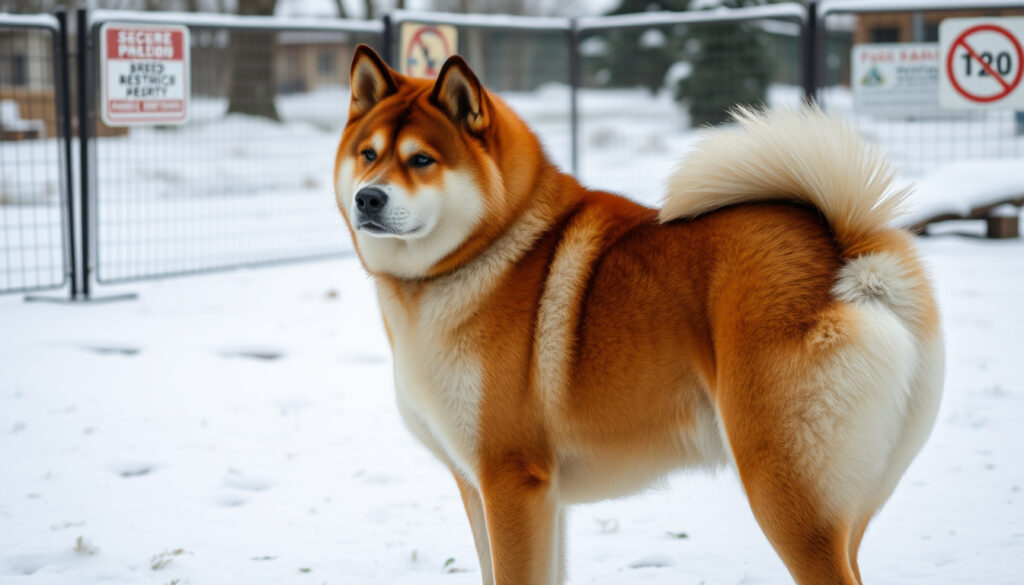
Akita Dog: Temperament, Care, Price, and Breed Restrictions
There’s a reason the Akita has been a symbol of loyalty in Japan for centuries – but that same devotion can make them a handful for unprepared owners. This guide walks through the breed’s temperament, care demands, and the controversies that surround it, so you can decide if an Akita fits your home.
Average weight (male): 70–130 lbs · Average height (male): 26–28 inches · Life expectancy: 10–13 years · Coat type: Double coat, dense
Quick snapshot
- Akita is a double-coated breed (Akita Club of America)
- Akita originated in Japan (Akita Club of America)
- Akita is known for loyalty and courage (Akita Club of America)
- Exact origins of the breed remain debated
- Whether the American and Japanese Akita are distinct breeds is unsettled
- Akita recognized as a restricted breed in several jurisdictions due to size and perceived aggression (PDSA)
- Potential owners should prepare for high grooming and exercise needs (Hill’s Pet Nutrition)
The table below outlines the breed’s core specifications for quick reference.
| Attribute | Details |
|---|---|
| Origin | Japan |
| Size | Large: 24–28 inches at shoulder |
| Coat | Double coat, dense; colors include red, white, brindle, sesame |
| Life Expectancy | 10–13 years |
| Temperament | Loyal, alert, protective, independent |
| Good with children? | With proper socialization, yes; but supervision needed |
How aggressive is an Akita?
What factors influence Akita aggression?
- Akitas have a strong protective and territorial instinct, described by the Akita Club of America (the breed’s national parent club) as “very intelligent, extremely loyal, and capable of aggressive tendencies,” especially toward same-sex dogs.
- Lack of early socialization and inconsistent training often amplify guarding behaviors, according to PetMD (a veterinary-reviewed resource).
- High prey drive means smaller animals can trigger chase instincts (Akita Club of America).
How does Akita aggression compare to other breeds?
Despite their reputation, Akitas are typically not aggressive toward people. The Akita Club of America states that aggression is “almost exclusively toward same-sex dogs.” In temperament tests, they score lower on human-directed aggression than many terrier breeds, but their size and strength make any incident more serious.
An Akita that is well-socialized from puppyhood can be a calm, reliable companion. But the same dog, under-socialized, can become a liability. The difference is almost entirely in the owner’s hands.
The implication: Aggression in Akitas is not a given – it’s a management issue. Owners who commit to rigorous socialization and consistent training can largely prevent problems, but the breed’s natural wariness means it will never be a “go-anywhere” dog.
Is an Akita a good family dog?
What is the typical temperament of an Akita?
- Hill’s Pet Nutrition (a science-based pet food company) describes the Akita as “deeply loyal, intelligent, dignified, and devoted to family.”
- They are generally reserved with strangers and not prone to overt affection with outsiders (Hill’s Pet Nutrition).
- Bonding is intense: they form strong attachments to their caretakers but can be aloof with newcomers.
How do Akitas interact with children?
The PDSA (the UK’s leading veterinary charity) does not recommend Akitas for households with young children because the dog may accidentally knock them over due to its size and strength. For older children, supervision is essential. PetMD adds that Akitas may not have much patience for young children’s antics.
Are Akitas good with other pets?
- Akitas often do best as the only pet in the home (PetMD).
- They can live with a dog of the opposite sex but are intolerant of same-sex dogs (Akita Club of America).
- Small animals, including cats, may trigger prey drive (PetMD).
The Akita can be a devoted family guardian – but that same devotion makes it uneasy with visitors and unpredictable around other animals. It’s a trade-off between loyalty and social flexibility.
What this means: An Akita can be a wonderful family dog for experienced owners who can provide structure, supervision, and a household that respects the breed’s need for space. For first-time owners or families with very young children, the risks may outweigh the rewards.
Why are Akitas a restricted breed?
Which countries or regions ban Akitas?
Akitas are subject to breed-specific legislation (BSL) in several countries. The PDSA confirms that Akitas are not banned under the UK’s Dangerous Dogs Act, but they are restricted in places like Australia, New Zealand, and some US municipalities. Restrictions often target breeds perceived as “dangerous,” though the criteria vary widely.
What is breed-specific legislation (BSL)?
BSL refers to laws that ban or restrict certain dog breeds, often based on appearance rather than individual behavior. Critics argue that the approach is ineffective and unfairly targets breeds like Akitas, while proponents cite public safety concerns.
Are Japanese Akitas banned in the UK?
No. The PDSA explicitly states that Akitas are not a banned breed under UK law. However, they are still considered a high-risk breed by some insurers and landlords, which can affect housing options.
Breed restrictions are often based on size and strength rather than actual aggression data. A well-trained Akita may be perfectly safe, yet still face housing bans in certain areas. Owners must research local laws before bringing one home.
Why this matters: BSL creates a lottery for owners. Even if your Akita is a model citizen, you could be forced to move or face higher insurance premiums. The controversy reflects a broader debate about whether breed bans work or simply punish responsible owners.
Are Akita dogs high maintenance?
What are the grooming requirements for an Akita?
- The Akita has a thick double coat that requires brushing two to three times per week, and daily during seasonal shedding (Hill’s Pet Nutrition).
- Shedding is heavy, especially in spring and fall. Regular brushing helps manage loose hair and reduces matting.
- Bathing is needed only occasionally – over-bathing strips the coat of natural oils.
How much exercise does an Akita need?
Akitas need moderate to high daily exercise – at least one hour of activity such as walking, jogging, or play. The PDSA advises not leaving an Akita alone for more than four hours, as they can become destructive if bored.
What health issues are common in Akitas?
- Hip dysplasia, hypothyroidism, and eye issues (e.g., progressive retinal atrophy) are common (PetMD).
- They are also prone to autoimmune conditions like sebaceous adenitis.
- Regular vet check-ups and a high-quality diet are essential for longevity.
Akitas are not low-maintenance dogs. Between grooming, exercise, training, and potential health costs, they demand a significant commitment of time and money. For busy or first-time owners, the breed may be overwhelming.
The pattern: The Akita’s beauty and dignity come at a cost. Owners must be prepared for heavy shedding, daily exercise, and a dog that needs constant engagement. It’s a breed for people who have time, not just space.
How does an Akita compare to a Shiba Inu?
What are the size and weight differences?
Akitas are much larger: males stand 26–28 inches and weigh 70–130 lbs, while Shiba Inus are about 13.5–16.5 inches tall and weigh 17–23 lbs. The size difference alone makes the Akita a more imposing presence.
Which breed is more independent?
Both are independent, but the Shiba Inu is often described as “cat-like” – more aloof and less eager to please. Akitas are more loyal and protective but still strong-willed. Hill’s Pet Nutrition notes that Akitas “do best with experienced pet parents” due to their stubborn streak and dominance tendencies.
Which is better for families?
Neither breed is ideal for first-time owners. Akitas are more protective and can be more dangerous due to size, but they bond deeply with their family. Shibas are less likely to be aggressive but are often more independent and less tolerant of handling. The Akita Club of America warns that Akitas should not be left unsupervised with other dogs, regardless of breed.
The trade-off: If you want a smaller, more independent dog that’s easier to manage physically, the Shiba Inu is the safer bet. If you want a devoted guardian and have the experience to handle a large, dominant breed, the Akita offers unmatched loyalty.
Five key differences, one pattern: Akita is larger, more protective, and demands more space and exercise; Shiba Inu is smaller, more independent, and easier to manage in apartments.
The comparison table below captures the main differences between the two breeds.
| Attribute | Akita | Shiba Inu |
|---|---|---|
| Size (male) | 26–28 in, 70–130 lbs | 13.5–16.5 in, 17–23 lbs |
| Temperament | Loyal, protective, dominant | Independent, alert, cat-like |
| Good with children | With supervision, but risk of knocking over | Better with older children, can be nippy |
| Exercise needs | 1+ hour daily, needs space | Moderate, adapts to apartment |
| Grooming | Heavy shedder, brush 2-3x/week | Moderate shedder, brush weekly |
Upsides
- Extremely loyal and protective of family
- Dignified, calm indoors when exercised
- Low maintenance bathing
- Long lifespan for a large breed (10–13 years)
Downsides
- High grooming needs, heavy shedding
- Strong prey drive, not safe with small pets
- Can be aggressive toward same-sex dogs
- Not recommended for inexperienced owners
- Possible breed restrictions and higher insurance
Clarity check
Confirmed facts
- Akita is a double-coated breed originating in Japan (Akita Club of America)
- Akita is known for loyalty and courage (Akita Club of America)
- Akitas are not banned in the UK under the Dangerous Dogs Act (PDSA)
What’s unclear
- Exact origins of the breed are debated
- Whether American and Japanese Akitas are distinct breeds is unsettled
- Effectiveness of breed-specific legislation in reducing dog bites
“The Akita is described as very intelligent, extremely loyal, and capable of aggressive tendencies, with those tendencies noted as almost exclusively toward same-sex dogs.”
— Akita Club of America (breed’s official parent club)
“Akitas are generally hardy, but subject to debate over strain distinctions.”
For potential owners in the UK and US, the choice is clear: An Akita is a high-commitment breed that rewards experienced owners with unmatched loyalty, but demands rigorous training, grooming, and awareness of local restrictions. If you cannot provide daily exercise, firm leadership, and a home without small pets, a different breed may be a better fit.
Related reading: Blue Mountains Day Trip Guide 2026: What to Know Before You Go · Native American Identity: Tribes, DNA, and Culture Facts
en.wikipedia.org, mywoof.com, dogsbite.org, peeva.co, boogiethepug.com, thejudgesplace.com, pbspettravel.co.uk, reddit.com
Frequently asked questions
Do Akitas shed a lot?
Yes, Akitas shed heavily, especially during seasonal changes. Regular brushing (2–3 times per week, daily during shedding season) helps manage the loose hair.
Are Akitas good guard dogs?
Akitas are naturally protective and alert, making them excellent watchdogs. However, their guarding instinct requires proper training to prevent over-protectiveness.
How much does an Akita cost?
Akita puppies from reputable breeders typically cost $1,000–$3,000, with show-quality lines higher. Annual costs for food, vet care, and grooming can exceed $1,500.
What is the difference between an American and Japanese Akita?
The Japanese Akita (Akita Inu) is slightly smaller, with a fox-like face and more colors. The American Akita is larger, heavier-boned, and accepts a broader range of colors. The debate over whether they are separate breeds continues.
Can Akitas live in apartments?
Akitas can adapt to apartment living if they receive sufficient daily exercise (1+ hour) and mental stimulation. However, their size and barking can be challenges in tight spaces.
Are Akitas hypoallergenic?
No, Akitas are not hypoallergenic. Their double coat produces dander and sheds heavily, which can trigger allergies.
What is the #1 most aggressive dog in the world?
There is no single authoritative ranking. Different studies based on bite statistics or temperament tests produce different lists. Akitas are sometimes cited in top ten lists, but the data is inconsistent and often misleading.
What is the most friendliest family dog?
Breeds like Labrador Retrievers and Golden Retrievers consistently rank as the friendliest family dogs. Akitas are loyal to their families but can be reserved with strangers, making them less suitable for households that frequently entertain guests.
More related posts
 We Wish You a Merry Christmas Lyrics – Full Text, History and Chords
 Gabriel Iglesias: Net Worth, Tour, Split, Cancellation
 Treat Williams Death: What Happened and Tributes
 Dodgers vs Blue Jays Timeline: 2025 World Series & History
 Best Ropa Vieja Canaria Near Me: Top Spots in Gran Canaria
 Rahul Gandhi: Political Career, Family, and Key Facts
 Jacques Villeneuve: F1 Champion, Career, and Net Worth
 Mats Sundin: Where He Is Now, Family, and NHL Career