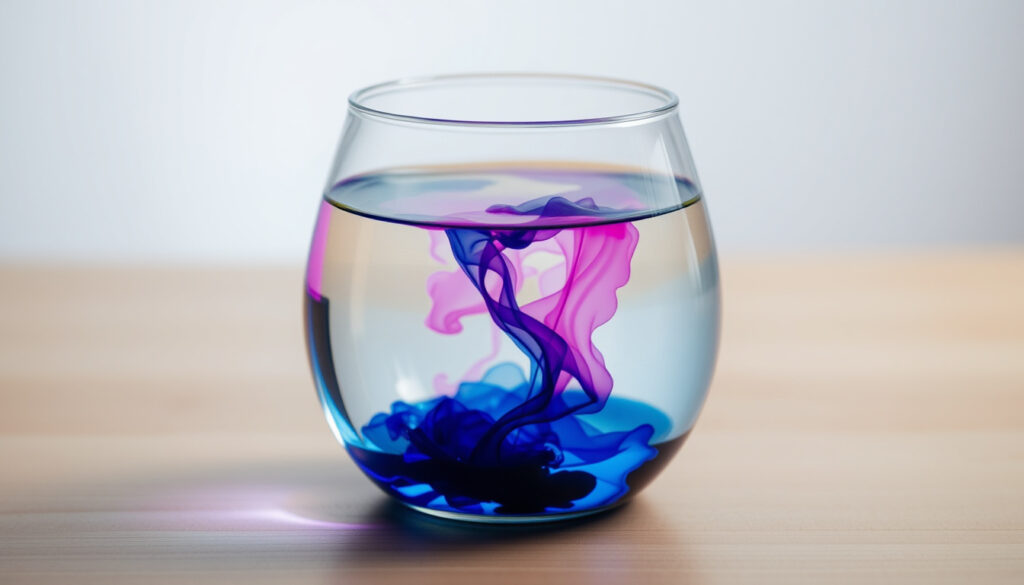
What Is an Empath? Traits, Signs & Psychology Guide
If you’ve ever walked into a room and immediately felt the tension before anyone said a word, or found yourself crying at a stranger’s grief on the subway, you might recognize something deeper in yourself than simple kindness. The term “empath” has gained momentum in self-help circles and social media, describing people who don’t just notice emotions—they absorb them. This guide cuts through the pop culture noise to explore what empaths actually are, what psychology says, and how to tell if you might be one.
Core Sensitivity: Extremely aware of others’ emotions · Key Identifier: Feels others’ emotions as own · Psych View: Highly sensitive individuals · Common Drain: Crowds and negativity · Personality Link: Often INFP type
Quick snapshot
- Highly attuned to emotions (Healthline)
- Absorbs feelings as if they were own (Judith Orloff MD)
- Clinical disorder status (not an official diagnosis)
- Quantitative population prevalence
- Neurobiology of empathy recognized via fMRI in the 1990s (PMC/NIH)
- Trait empathy stability now under academic scrutiny (Psychology Today)
- Distinguishing pop psychology from scientific empathy research
- Understanding how cultivation changes empathic capacity
The following key facts provide a quick reference for understanding empath traits and their psychological basis.
| Label | Value |
|---|---|
| Definition | Person highly attuned to others’ emotions |
| Prevalence | Not clinically defined |
| Linked Type | INFP personality |
| Energy Issue | Absorbs negativity |
What Is an Empath and How Do You Know If You Are One?
An empath is someone described as highly attuned to the emotions and energies of those around them. Unlike simple empathy—a skill many people practice—empaths reportedly experience others’ feelings as though they were their own. Psychiatrist Judith Orloff MD, who has written extensively on the topic, describes empaths as “naturally giving, spiritually open, and good listeners” who absorb emotions due to heightened sensitivities (Judith Orloff MD).
Common signs of empaths
Healthline identifies 15 signs that someone may be an empath (Healthline), while Highly Sensitive Refuge lists 13 indicators (Highly Sensitive Refuge). Common signs include taking on others’ emotions as your own, intuitively understanding perspectives without explanation, and functioning as a social lie detector by reading subtle emotional cues. Empaths often need significant alone time to recharge after emotional interactions, and crowds or highly charged environments can feel overwhelming.
Self-assessment traits
- Feel overwhelmed by closeness, crowds, or intense personalities
- Need alone time to recover from emotional overload
- Intuitively sense unspoken emotions before they’re expressed
- Good at picking up dishonesty through subtle behavioral cues
- Often described as having “huge hearts” while struggling with boundaries
Being highly attuned to emotions doesn’t make you an empath by clinical definition—empathy exists on a spectrum. The key distinction is whether you absorb feelings as if they were your own, rather than simply understanding them intellectually.
What makes someone an empath?
The question of what actually makes someone an empath sits at the intersection of pop psychology and scientific empathy research. From a scientific standpoint, empathy is neurobiologically based, involving neural networks for perceiving, resonating with, and taking the perspective of others while distinguishing your own emotions from theirs (PMC/NIH). The term “empath” itself lacks formal clinical definition—it’s a construct popularized in self-help literature rather than a diagnosable trait in standard psychology.
Emotional sensitivity factors
Research from the National Institutes of Health confirms that empathy spans from low-level emotional contagion to high-level perspective-taking (PubMed). Empaths reportedly filter the world through intuition, struggling to intellectualize feelings the way others might. This heightened sensitivity means environments that feel neutral to most people—busy offices, crowded spaces, tense family gatherings—can become emotionally exhausting.
Innate vs developed traits
The Interpersonal Reactivity Index (IRI) measures four subscales: Empathic Concern (EC), Personal Distress (PD), Perspective Taking (PT), and Fantasy (F) (Frontiers in Psychology). High scores on these scales correlate with greater accuracy in empathizing, with research showing high-empathy individuals demonstrate longer fixation on the eyes area during emotional recognition tasks (Frontiers in Psychology).
“It’s a cognitive style of perspective taking where someone imagines another person’s perspective, reads their emotions, and can understand them in general.”
— Sara Konrath, Researcher (American Psychological Association)
The neuroscience shows that mirror neurons enable emotional cue reading and unconscious mimicry—the brain literally simulates what others feel (PMC/NIH). This biological mechanism underpins what pop culture calls “empath abilities.”
What do psychologists say about empaths?
Psychologists approach the empath concept with important caveats. The trait empathy framework—that some people are simply “more empathic” by nature—faces growing criticism. According to Psychology Today, trait empathy is not stable; it emerges in interactions under the right conditions rather than representing a fixed personal quality (Psychology Today). This challenges the pop psychology portrayal of empaths as having a permanent, innate capacity.
Psychological perspectives
Empathy research correlates most strongly with Big Five traits of agreeableness and openness, less with extraversion, neuroticism, or conscientiousness (Jacksonville State University). The Ferguson Empathy Scale, which measures dispositional empathy, correlates strongly with agreeableness—suggesting that personality structure, not a special “empath gene,” explains much of what makes someone highly sensitive to others.
Relation to high sensitivity
The American Psychological Association distinguishes between emotional empathy (feeling others’ pain) and cognitive empathy (understanding through perspective-taking without personal distress). Their research finds cognitive empathy via perspective-taking most beneficial, as it allows understanding without triggering emotional overload (APA Monitor). The catch: excessive empathy can lead to personal distress, actually reducing prosocial behavior despite good intentions.
“Empathic people ask themselves, ‘Maybe I need to find out more before I jump to a harsh judgment.'”
— Ann Rumble PhD, Psychology Lecturer (American Psychological Association)
What personality type do empaths have?
The INFP personality type (Mediator) frequently appears in empath discussions. This connection stems from INFPs’ core traits: idealist-minded, deeply values-driven, and highly attuned to others’ emotional states. However, the relationship isn’t deterministic—empaths can exist across multiple personality types.
INFP and empath links
INFPs score high on the empathy-linked Big Five dimensions of agreeableness and openness, which research confirms as the traits most strongly correlated with empathic capacity (Jacksonville State University). Research from IU ScholarWorks also links empathy to altruism, low narcissism, and generativity—the profile of someone who genuinely wants to help others (IU ScholarWorks).
Other associated types
- INFJ (Advocate): Intuition combined with feeling preferences creates strong empathic awareness
- ISFJ (Defender): High agreeableness and focus on others’ needs
- ENFJ (Protagonist): Natural attunement to others’ emotional landscapes
The pattern: types high in agreeableness and openness to experience show stronger empathic accuracy. But personality type provides general tendencies, not an empath diagnosis.
What drains an empath’s energy?
Empaths commonly report feeling depleted by emotional overload—a phenomenon where absorbing others’ feelings depletes personal energy reserves. This isn’t metaphor; the neuroscience shows that processing others’ emotions requires real cognitive and emotional resources.
Common energy drains
- Crowds and crowded spaces: Multiple emotional inputs overwhelm the filtering system
- Negativity and conflict: Negative emotions are absorbed more readily than positive ones
- Intense personalities: Dominant social energy “takes up space” in empaths’ emotional field
- Emotional labor requests: Being expected to manage others’ emotions without reciprocation
- News and media: Constant exposure to others’ suffering through screens
Protection strategies
Healthline notes that empaths need alone time to recharge from emotional overload (Healthline). Beyond solitude, research-backed strategies include setting clear boundaries, practicing cognitive reframing (shifting from emotional to perspective-taking empathy), and cultivating self-awareness about personal limits.
“Empaths have a higher sensitivity to outside stimuli such as sounds, big personalities, and hectic environments.”
— Kim Egel, Licensed Marriage and Family Therapist (Healthline)
Empaths face a genuine dilemma: the same sensitivity that enables deep connection also creates vulnerability to burnout. The solution isn’t suppressing empathy but developing cognitive empathy skills that allow understanding without absorption.
The picture so far
Confirmed
- Empaths exist as a pop psychology construct describing heightened emotional sensitivity
- Empathy correlates with Big Five agreeableness and openness
- Mirror neurons enable unconscious emotional mimicry
- Cognitive perspective-taking reduces personal distress
- Empaths need alone time to recover from emotional overload
Unclear
- Clinical disorder status—empath isn’t a formal diagnosis
- Quantitative population prevalence data
- Whether “empath” represents innate trait or situational capacity
- Long-term stability of high-empathy trait
Related reading
- Healthline — What Is an Empath? Signs, Causes, and How to Cope
- PMC/NIH — The Science of Empathy
- American Psychological Association — Cultivating Empathy
- Judith Orloff MD — Top 10 Traits of an Empath
Related reading: They Both Die at the End · The Five People You Meet in Heaven
While empaths intuitively absorb others’ emotions, narcissist signs and traits frequently exploit this sensitivity, leading to emotionally draining relationships.
Frequently asked questions
What is an empath test?
No clinically validated “empath test” exists. Self-assessment tools circulating online are based on pop psychology criteria rather than scientific measures. The closest scientific instruments are the Interpersonal Reactivity Index (IRI) and Ferguson Empathy Scale, which measure specific empathy components rather than labeling someone an “empath.”
What is an empath personality?
An empath personality describes someone who experiences heightened emotional sensitivity to others. Research associates this with high Big Five agreeableness and openness. INFP and INFJ types frequently appear in empath discussions, but empath traits can manifest across personality types.
What is an empath disorder?
“Empath disorder” is not a clinical diagnosis. Some sources informally describe it as difficulty filtering others’ emotions. The closest clinical concepts are highly sensitive person (HSP) traits or certain autism spectrum features where emotional processing differs from typical patterns.
What is an empath superpower?
“Empath superpower” refers to pop psychology claims that empaths possess extraordinary emotional abilities—reading minds, sensing energies, or absorbing others’ physical symptoms. Science confirms enhanced emotional cue reading via mirror neurons, but no supernatural capacities. The “superpower” framing romanticizes real psychological traits.
What is an empath narcissist?
The empath-narcissist pairing describes a dynamic where empaths’ tendency to prioritize others’ needs attracts narcissistic individuals who exploit this generosity. Research shows empathy linked to low narcissism, making these personality types conceptual opposites in the pop psychology framework.
What is the opposite of an empath?
Pop psychology describes the opposite of an empath as someone with narcissistic personality traits—lacking empathy, focused on self. Scientifically, low empathy correlates with high alexithymia (difficulty identifying emotions) and certain Dark Triad traits. But the “opposite” framing oversimplifies the empathy spectrum.
Who is the best partner for an empath?
The best partners for empaths typically demonstrate emotional intelligence, respect boundaries, and understand the need for alone time. Judith Orloff MD notes that empaths are drawn to positive relationships and use gut feelings to avoid “energy vampires.” Partners who validate emotional experiences and maintain healthy boundaries support empath wellbeing.
More related posts
 Barcelona vs Celta Vigo: Live Score, Prediction & Highlights
 189 cm in Feet – Exact 6′ 2.41″ Conversion + Guide
 Cast of Stranger Things: Complete List by Season 1-5
 Billet Pas Chers Vol Brownsville – Lowest Fares and Booking Tips
 Words to Describe a Person: 350+ Positive Adjectives & Traits
 When the Phone Rings: K-Drama Plot, Ending Explained
 Eva Longoria Movies and TV Shows – Complete Filmography and Best Roles
 What Does Skibidi Mean – Gen Alpha Slang Explained