La Fortuna Costa Rica: Safety, Activities & Travel Guide
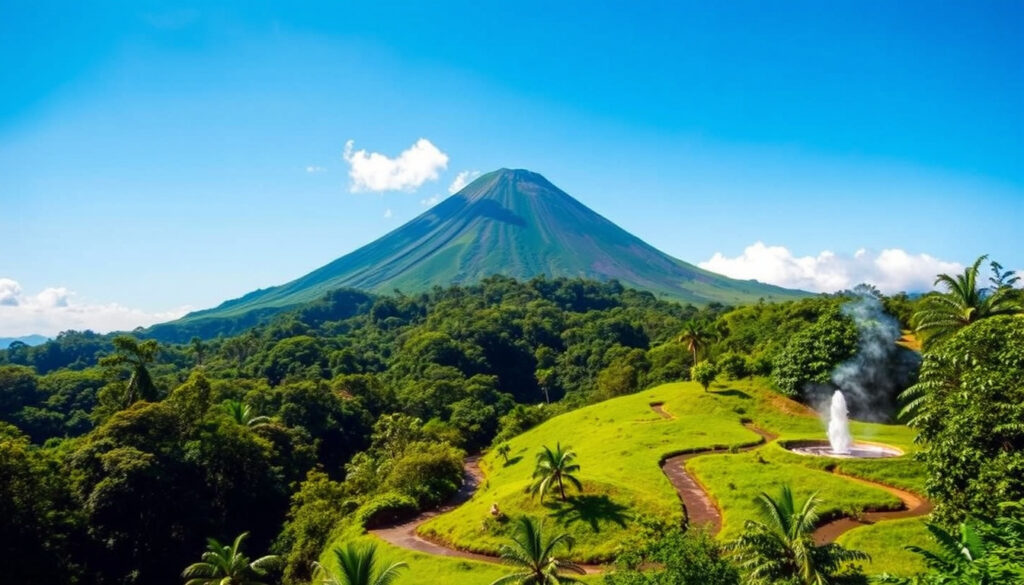
La Fortuna, Costa Rica, sits at the foot of Arenal Volcano—dormant since 2010—and offers jungle waterfalls, natural hot springs, and adrenaline-pumping activities. Adventure seekers have been converging on this corner of Alajuela Province for decades—but before you lace up your hiking boots, it pays to know what the U.S. government actually says about safety here, and which risks are real versus overblown.
Province: Alajuela · Canton: San Carlos · Key Attraction: Arenal Volcano · Popular Activities: Waterfalls, Ziplining, Hot Springs · Travel Advisory Source: U.S. State Department
Quick snapshot
- Arenal Volcano has been dormant since October 2010 (Costa Rica Expeditions)
- La Fortuna Waterfall drops 75 meters into a misty pool (Vamos Rent a Car)
- U.S. advisory for Costa Rica updated April 02, 2026: Level 2 (U.S. State Department)
- Exact shuttle pricing varies by operator and season
- Current nightlife vibrancy in La Fortuna town center
- Specific trail closure alerts for Arenal National Park in early 2026
- Major eruption of Arenal Volcano on July 29, 1968 (Copa de Arbol)
- Volcanic activity ceased in October 2010 (Costa Rica Expeditions)
- U.S. advisory upgraded to Level 2 on April 02, 2026 (U.S. State Department)
- Certified adventure operators continue expanding safety protocols
- Beach day-trip services from La Fortuna adding more departure options
- Park rangers present at Arenal trail boundaries for visitor assistance
These details anchor the practical information every La Fortuna visitor needs before arrival.
| Detail | Value |
|---|---|
| Location | District of San Carlos canton, Alajuela Province |
| Key Landmark | Arenal Volcano (dormant since 2010) |
| Main Attractions | Hot springs, waterfalls, jungle hikes |
| Travel Hub | San Jose Airport primary entry |
| Volcanoes in Costa Rica | 16 total |
| Current U.S. Advisory | Level 2: Exercise increased caution |
Is La Fortuna in Costa Rica worth visiting?
For adventure-focused travelers, La Fortuna is a destination that rewards preparation. The town sits roughly 15 minutes from Arenal Volcano, serving as the base camp for an impressive range of outdoor activities. You can soak in geothermal hot springs, rappel down waterfall faces, or cross jungle canopy on zipline courses that overlook the volcano’s dormant peak. The area draws families, solo backpackers, and couples alike, all seeking that rare combination of accessible wilderness and comfortable infrastructure.
Most serious incidents involve travelers who ignored posted warnings or ventured off established trails. Your odds of a dangerous encounter drop sharply when you stick to marked paths and follow the guidance of certified operators.
Adventurous activities
Arenal Volcano National Park opens its trails at 8 am, with last entry at 2:30 pm. Morning visits tend to offer clearer views of the volcano and thinner crowds, according to the Vamos Rent a Car travel guide. The trail network includes El Ceibo, Los Miradores, Las Coladas, and Las Heliconias, each winding through terrain shaped by centuries of volcanic activity. Off-trail hiking near the volcano is prohibited.
Certified operators in La Fortuna offer hiking, horseback rides, ziplining, canopy tours, kayaking, and white-water rafting—all with documented safety standards. Copa de Arbol guide to Arenal notes that park rangers are stationed at boundary points to assist visitors.
Natural attractions
The 75-meter La Fortuna Waterfall draws visitors with its dramatic cascade, though the hike down and back involves steep switchbacks that demand decent fitness. Free hot springs are accessible along the Las Coladas trail, while the Mistico Hanging Bridges offer a different perspective on the rainforest canopy. Lake Arenal provides calmer waters for kayaking and fishing.
Jungle trails in the Arenal region call for sturdy footwear. The combination of slick roots, loose stones, and occasional snakes or insects makes open-toed shoes a genuine liability, not just an comfort issue.
Pros and cons
Upsides
- Well-established tourism infrastructure with certified operators
- Wide range of adventure activities suited to different skill levels
- Safety record in the Arenal area remains strong, with clear signage and ranger presence
- Eco-lodges and accommodations cater to international visitors
Downsides
- Shuttle costs ($50–$70 per person) add up for budget travelers
- Closest beaches require a full-day commitment to reach
- Humidity and insects can test visitor comfort
- Petty crime in urban areas requires standard precautions
The pattern is consistent: La Fortuna delivers on adventure, but it asks travelers to stay alert, follow guidance, and plan logistics ahead. Those willing to do that find one of Central America’s most rewarding outdoor destinations.
What airport do I fly into for La Fortuna, Costa Rica?
Every major route to La Fortuna funnels through Juan Santamaría International Airport near San José, Costa Rica’s capital. From there, it’s a drive of roughly 3 to 3.5 hours to La Fortuna, either by rental car or pre-booked shuttle. The U.S. State Department travel advisory advises against driving at night on unfamiliar Costa Rican roads, which makes shuttles the practical choice for most first-time visitors.
Nearest airports
Juan Santamaría Airport (SJO) in Alajuela handles the vast majority of international flights. Daniel Oduber Quirós International Airport in Liberia (LIR) is a viable secondary option if you’re coming from North America—it’s closer to the Pacific coast but adds driving time to reach La Fortuna. Most shuttle services quote pricing based on San José departures.
Shuttle options
Operators such as Travel Excellence and Grayline run scheduled shared shuttles from San José to La Fortuna with hotel pickup. Private transfers cost significantly more but eliminate waiting time and stops. Vamos Rent a Car Arenal guide notes that English-speaking drivers and pre-arranged pickups reduce the friction of a long journey after an international flight.
Transfer costs
Shared shuttle rates typically range from $50 to $70 per person one-way, though exact pricing varies by operator, season, and group size. Private transfers can run $150 to $250 or higher depending on vehicle class. Booking in advance through reputable companies—rather than negotiating at the airport—generally yields more reliable service and fixed pricing.
Rental cars offer flexibility for visiting multiple Arenal-area attractions, but Costa Rican highways outside major routes can be poorly lit and populated with fast-moving trucks. If you haven’t driven in Central America before, the shuttle trade-off in convenience may be worth the cost.
Is it safe to walk around La Fortuna, Costa Rica?
La Fortuna sees thousands of tourists annually and maintains a reputation as one of Costa Rica’s safer destinations for visitors. Violent crime targeting tourists is rare. The Tico Times safety report reported that petty crime, not violence, drives the U.S. Level 2 advisory—a distinction that matters when you’re weighing whether to visit.
Walking safety
Standard urban precautions apply in La Fortuna’s town center. Keep an eye on your belongings in crowded markets and near ATMs. Avoid displaying expensive electronics or large amounts of cash. Walking at night is safer on well-lit main streets than on darker side roads. Restaurant patios and hotel lobbies feel welcoming precisely because they attract visitors who are relaxed—but that same relaxed energy can make bags and phones easy targets for opportunistic thieves.
General cautions
The BHTP travel safety guide advises using insect repellent with DEET, watching drinks in bars, and avoiding mass transit after dark. The Government of Canada travel safety page notes that adventure sports carry real risk if you skip proper safety equipment—helmets, harnesses, and briefings exist for a reason.
Travel advisories
The U.S. State Department updated its Costa Rica advisory on April 02, 2026, maintaining Level 2: Exercise increased caution. The U.S. Embassy Costa Rica spring break advisory echoed this for spring break travelers, citing petty crime as the primary concern rather than safety incidents at tourist sites. The Costa Rica Tourism Board official tips provides official guidance on adventure activity safety, including helmet and protective gear rules for ATVs.
La Fortuna’s safety record is strong enough that the main risks—snake encounters, minor theft, vehicle incidents—are manageable with the same precautions you’d use in any mid-sized tourist destination. The area hasn’t earned its reputation by accident.
What to be cautious of in Costa Rica?
Knowing what actually poses a threat in the La Fortuna area helps you prepare without unnecessary anxiety. Mistico Park wildlife guidelines emphasize staying on marked trails, never feeding or touching animals, and keeping noise levels low—advice that protects both visitors and the ecosystem.
Deadly predators
Costa Rica is home to crocodiles, fer-de-lance snakes, and other venomous species, but encounters are uncommon for visitors who stick to developed areas and marked trails. The World Nomads natural dangers guide notes that Costa Rica has 16 volcanoes, with Arenal currently dormant—meaning volcanic risk is low compared to active cones like Rincon de la Vieja and Turrialba. Phreatic explosions, though possible, remain rare events.
Pre-travel knowledge
Before you depart, register your trip with your country’s embassy or consular services. Check that your travel insurance covers medical evacuation. Pack closed-toe hiking shoes, quick-dry clothing, and more water than you think you’ll need. Copa de Arbol Arenal guide recommends bringing sunscreen, bug spray, and a small first-aid kit for trail days.
Health and safety
The Arenas Travel CR safety guide notes that disease risk in the Arenal area is low, but insect-borne illness remains a consideration—use repellent in rainforest zones. Rip currents affect Pacific beaches; Lake Arenal offers calmer swimming conditions. U.S. State Department advisory lists active volcanoes as Rincon de la Vieja, Turrialba, and Poás—not Arenal—which is dormant and considered safe for trail hiking.
Pacific beaches near La Fortuna can have powerful rip currents. Swim only at designated areas with lifeguard coverage, and never enter the ocean after drinking alcohol. Lake Arenal is calmer but still demands respect for unseen underwater features.
How far is the beach from La Fortuna Costa Rica?
La Fortuna sits inland at the base of a volcano, not on the coast. The nearest Pacific beaches are roughly 2 to 2.5 hours west by car, while the Caribbean coast near Puerto Viejo lies 4 to 5 hours to the east. This distance shapes the day-trip calculus for beach-focused visitors.
Closest beaches
Tamarindo and Flamingo on the Pacific coast draw the most La Fortuna visitors seeking sand and surf. They’re popular, developed, and equipped for tourists—restaurants, rental shops, and organized activities make them accessible even for first-time Costa Rica travelers. Other options include Playa Hermosa and Conchal, each with its own character and crowd level.
Trip options
Organized day trips from La Fortuna handle the logistics: transportation, meals, and beach time are bundled. Shuttle services also operate direct routes to Pacific beach towns, though schedules may not align with a full beach day. Arenas Travel CR 2026 advisory notes that riptides are common on Pacific beaches—choose swimming areas with lifeguards and heed warning flags.
Travel time
The drive from La Fortuna to Tamarindo covers roughly 140 kilometers and takes 2.5 to 3 hours one-way, depending on road conditions and stops. Budget a full day—departing early, returning late—for a beach trip to feel worthwhile rather than rushed. The dry season from December through April generally offers the best weather for coastal excursions.
Beach visits from La Fortuna are entirely feasible but require commitment. Pack water, sunscreen, and snacks for the journey, and expect to spend a full day away from the Arenal area. Many visitors choose to split their time—staying a night or two on the coast before or after their volcano-focused days.
The implication: if beach time is central to your Costa Rica vision, build it into your itinerary as a separate leg rather than a side trip. Trying to squeeze it in as a long day from La Fortuna often leaves you tired and short on beach hours.
“Your odds of encountering a dangerous situation are very small if you move smart and heed local signs.”
“Costa Rica continues to hold a Level 2 advisory, meaning travelers should exercise increased caution, primarily due to petty crime.”
Related reading: Things to Do in Niagara Falls · Oak Bay Beach Hotel Reviews
La Fortuna provides easy access to Arenal Volcano National Park, with many more options explored in this guide to Costa Rica national parks highlighting the country’s biodiversity hotspots.
Frequently asked questions
What is the prettiest town in Costa Rica?
Beauty depends on what you’re seeking. La Fortuna wins for volcano-and-adventure scenery. For colonial charm, Monteverde draws nature-lovers. Uvita offers Pacific coastal views. Each destination has its own character.
What is Costa Rica’s deadliest predator?
Crocodiles and fer-de-lance snakes account for most serious incidents. Attacks on humans remain rare, particularly for visitors who stay on marked trails and avoid swimming in non-designated river or ocean areas.
What do I wish I knew before traveling to Costa Rica?
Most returning travelers emphasize: book airport shuttles in advance, bring more cash than you think you’ll need for small vendors, pack quick-dry clothing, and respect park rules without exception. The country rewards preparation.
How much is a shuttle from San Jose Airport to La Fortuna?
Shared shuttles typically cost $50–$70 per person one-way. Private transfers run $150–$250 or more. Booking through established operators before arrival usually yields more reliable pricing than negotiating at the airport.
What is the weather like in La Fortuna Costa Rica?
La Fortuna sits in a tropical climate zone with consistent heat and humidity year-round. Afternoon rain is common, especially from May through November. The dry season from December through April offers the most predictable weather for outdoor activities.
What hotels are best in La Fortuna Costa Rica?
Options range from budget hostels in town to luxury eco-lodges overlooking the volcano. Tabacón Thermal Resort and The Springs Resort are known for their hot spring access. Mid-range travelers find solid value in family-run hotels with central locations.
Is there nightlife in La Fortuna Costa Rica?
La Fortuna’s nightlife is modest compared to beach towns. Expect laid-back bars, live music on select nights, and a few dance venues. The scene suits relaxed evenings rather than high-energy clubbing.
More related posts
 Cour d’Appel du Québec – Quebec’s Appellate Court Explained
 Oak Bay Beach Hotel – Reviews, Prices and Amenities
 Whole Chicken in Air Fryer: Time, Temp & Easy Recipe
 Coffee Table with Storage: IKEA, Round & Ireland Options
 Joke of the Day: Funny Daily Laughs and Short Jokes
 Best Ropa Vieja Canaria Near Me: Top Spots in Gran Canaria
 Marie-Philip Poulin Barred from French Content in PWHL
 What’s the Time in London – Current BST Status and DST Guide