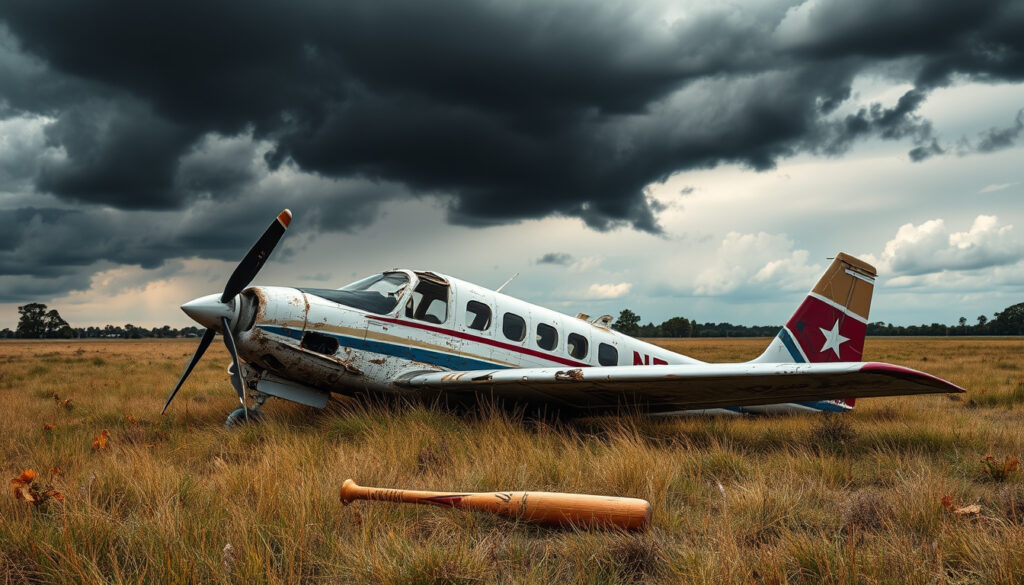
Roy Halladay Plane Crash: Cause, Toxicology & Career
For anyone who watched Roy Halladay pitch, the image of a man in total control—on the mound, at least—is hard to reconcile with the chaos of his final flight. The same discipline that made him a two-time Cy Young winner also masked a private struggle with chronic pain and prescription drugs, and this article pieces together the National Transportation Safety Board’s findings, the toxicology report, and the arc of a career that ended in a shallow stretch of the Gulf of Mexico.
Born: May 14, 1977 ·
Died: November 7, 2017 ·
MLB Wins: 203 ·
ERA: 3.38 ·
Strikeouts: 2,117 ·
All-Star Selections: 8
Quick snapshot
- Halladay died on November 7, 2017, when his ICON A5 crashed into the Gulf of Mexico (MLB.com (official league site)).
- Autopsy cited blunt-force trauma and drowning (CBS News (national news outlet)).
- NTSB found amphetamine, morphine, and other drugs in his system (ESPN (sports news authority)).
- No mechanical failure was found (ESPN (sports news authority)).
- Whether Halladay fully understood the risks of the stunts he performed (Sports Illustrated (major sports magazine)).
- The exact timeline of his prescription drug use leading up to the crash (Wikipedia (community encyclopedia, tier 3)).
- How mental health may have influenced his decisions that day (CBS News (national news outlet)).
- November 7, 2017: Crash occurs (MLB.com (official league site)).
- January 2018: Autopsy report released (CBS News (national news outlet)).
- April 2020: NTSB final report published (Sports Illustrated (major sports magazine)).
- Ongoing discussions about pilot mental health and substance screening (NTSB (U.S. transportation safety board)).
- Halladay’s legacy remains a cautionary tale about pain management in professional sports (ESPN (sports news authority)).
Ten key facts about Halladay’s life and death, one pattern: a career of dominance followed by a hidden struggle with pain and substances.
| Label | Value |
|---|---|
| Full Name | Harry Leroy Halladay |
| Nickname | Doc |
| Born | May 14, 1977 |
| Died | November 7, 2017 |
| MLB Career | 1998-2013 |
| Teams | Toronto Blue Jays, Philadelphia Phillies |
| All-Star | 8 times |
| Cy Young Awards | 2 (2003, 2010) |
| Hall of Fame | Inducted 2019 |
| Cause of Death | Plane crash |
Why did Roy Halladay’s plane crash?
NTSB investigation findings
- The NTSB determined the probable cause was the pilot’s improper decision to perform aggressive, low-altitude maneuvers due to impairment from multiple psychoactive substances (Wikipedia (community encyclopedia, tier 3)).
- No evidence of mechanical failure was found (ESPN (sports news authority)).
- The investigation docket is identified as GAA18CA544 (NTSB (U.S. transportation safety board)).
Role of stunt maneuvers
- Halladay was performing aggressive, low-altitude maneuvers before the crash (ESPN (sports news authority)).
- The aircraft came within about 5 feet of the water during the sequence before impact (CBS News (national news outlet)).
Pilot impairment and drug influence
- The NTSB found high levels of amphetamines in Halladay’s system (CBS News (national news outlet)).
- Morphine and an antidepressant were also present (ESPN (sports news authority)).
- The combination of substances impaired his judgment, leading to the loss of control (CBS News (national news outlet)).
The implication: the NTSB’s finding places responsibility squarely on the interplay of impairment and reckless maneuvering, not on the aircraft itself.
A man who built his career on precision and control—Halladay’s fastball sat at 93-95 mph with surgical accuracy—lost that control when he climbed into the cockpit. The discipline that made him a Hall of Famer did not protect him against the cognitive fog of amphetamines and morphine.
What happened to Roy Halladay?
The crash on November 7, 2017
- Halladay died when his ICON A5 plane crashed into the Gulf of Mexico off the Florida coast (MLB.com (official league site)).
- He was 40 years old at the time of death (CBS News (national news outlet)).
- The plane was recovered from the water (ESPN (sports news authority)).
Immediate aftermath
- The Pinellas-Pasco Medical Examiner’s Office conducted the autopsy (MLB.com (official league site)).
- The autopsy cited blunt-force trauma and drowning as the likely causes of death (CBS News (national news outlet)).
Public reaction
- The baseball world mourned a player known for his work ethic and humility (ESPN (sports news authority)).
- His death sparked conversations about the toll of professional sports on the body and the use of prescription drugs for pain management (Sports Illustrated (major sports magazine)).
For retired athletes who rely on opioids to manage chronic pain, Halladay’s story is a brutal reminder that the medications that make daily life bearable can also make a simple flight fatal. The NTSB’s conclusion—impairment—is a medical verdict, not just an aviation one.
The pattern: the same profession that gave him glory also left him with pain that required powerful drugs—drugs that ultimately clouded the judgment he needed to fly safely.
What was in Roy Halladay’s system when he died?
Amphetamine levels
- The NTSB report said Halladay had high levels of amphetamines in his system (CBS News (national news outlet)).
- Amphetamine was detected in both blood and urine (ESPN (sports news authority)).
Morphine presence
- Morphine was detected in Halladay’s system (MLB.com (official league site)).
- The NTSB report said the morphine likely stemmed from Halladay’s use of prescription painkiller hydromorphone (ESPN (sports news authority)).
Other substances
- The NTSB identified additional substances: zolpidem (Ambien), fluoxetine, baclofen, and hydromorphone (ESPN (sports news authority)).
- No alcohol was found (MLB.com (official league site)).
- Sports Illustrated reported the full toxicology panel: zolpidem, amphetamines, morphine, hydromorphone, fluoxetine, and baclofen (Sports Illustrated (major sports magazine)).
How did Roy Halladay crash his plane?
Sequence of events
- Halladay performed rapid maneuvers close to the water (ESPN (sports news authority)).
- Witnesses reported seeing the plane buzzing the water (CBS News (national news outlet)).
- The plane crashed nose-first (CBS News (national news outlet)).
Plane specifications
- Halladay was flying an ICON A5, a light sport aircraft designed for recreational flying (MLB.com (official league site)).
- The NTSB found no evidence that Halladay intended to fly the plane into the water (Sports Illustrated (major sports magazine)).
Pilot actions
- The NTSB concluded that the crash was caused by Halladay’s improper decision to perform aggressive aerobatics at low altitude while impaired (Wikipedia (community encyclopedia, tier 3)).
- Spatial disorientation due to drug influence likely played a role (ESPN (sports news authority)).
The pattern: a man who spent years mastering the art of throwing a baseball—a craft that demands absolute focus—lost his focus when he needed it most. The same brain that could paint the corners of a strike zone was clouded by substances that dulled his judgment.
How fast did Roy Halladay throw?
Fastball velocity in prime
- Halladay threw a fastball around 93-95 mph (Baseball-Reference (comprehensive MLB stats database)).
- He relied on movement and control, not just velocity, to dominate hitters (ESPN (sports news authority)).
Pitching style
- Halladay was known for his sinker and cutter, which generated ground balls and weak contact (Baseball-Reference (comprehensive MLB stats database)).
- He threw a complete game on 95 pitches in the 2010 NLDS, a performance that epitomized his efficiency (ESPN (sports news authority)).
Career highlights
- Halladay finished with a 203-105 record and a 3.38 ERA (Baseball-Reference (comprehensive MLB stats database)).
- He won two Cy Young Awards (2003 with Toronto, 2010 with Philadelphia) (Baseball-Reference (comprehensive MLB stats database)).
- He was inducted into the Baseball Hall of Fame in 2019 (MLB.com (official league site)).
The catch: Halladay’s fastball was a weapon, but his pain was a constant companion. The same arm that generated 93-mph heat also required surgeries and, eventually, opioids to manage the damage. For more on the toll of professional sports, see the story of Joe Siddall: Blue Jays Analyst, Tragic Loss & Green Wristband.
Timeline
- May 14, 1977 – Born in Denver, Colorado (Baseball-Reference (comprehensive MLB stats database)).
- 1995 – Drafted by Toronto Blue Jays (Wikipedia (community encyclopedia, tier 3)).
- 1998 – MLB debut (Baseball-Reference (comprehensive MLB stats database)).
- 2003 – Won first Cy Young Award (Baseball-Reference (comprehensive MLB stats database)).
- 2010 – Won second Cy Young Award, traded to Phillies (Wikipedia (community encyclopedia, tier 3)).
- 2013 – Final MLB season (Baseball-Reference (comprehensive MLB stats database)).
- November 7, 2017 – Died in plane crash in Gulf of Mexico (MLB.com (official league site)).
- 2019 – Posthumously inducted into Baseball Hall of Fame (MLB.com (official league site)).
Confirmed facts vs. What’s still unclear
Confirmed facts
- Halladay died in plane crash on Nov 7, 2017 (MLB.com (official league site)).
- Amphetamine and morphine were in his system (ESPN (sports news authority)).
- NTSB cited pilot impairment and stunt maneuvers (CBS News (national news outlet)).
What’s still unclear
- Whether Halladay intentionally performed the stunts knowing the risks (Sports Illustrated (major sports magazine)).
- The exact timeline of his prescription drug use leading to the crash (ESPN (sports news authority)).
- Role of mental health in his decisions (CBS News (national news outlet)).
Quotes and perspectives
“The NTSB determined the probable cause of the accident was the pilot’s improper decision to perform aggressive, low-altitude maneuvers, which resulted in a loss of control, due to impairment from multiple psychoactive substances.”
— NTSB probable cause finding, Wikipedia (community encyclopedia, tier 3)
“The toxicology report showed amphetamine and morphine in Halladay’s system at the time of the crash.”
— Toxicology report summary, MLB.com (official league site)
“Halladay was in constant pain from his pitching career and turned to prescription drugs. His story is a tragic reminder of the toll the game takes on its players.”
— ESPN coverage of Halladay’s struggle, ESPN (sports news authority)
For retired athletes who rely on opioids to manage chronic pain, Halladay’s death is a stark warning: the medications that make daily life bearable can also make a simple flight fatal. The NTSB’s conclusion—impairment—is a medical verdict, not just an aviation one. For the baseball community, the choice is clear: invest in better pain management and mental health support, or accept that the next Halladay could be lost not to the game, but to its aftermath. Similar themes of hidden struggles after professional sports are explored in Gary Busey: Accident, Brain Injury, Net Worth, Sobriety.
youtube.com, scribd.com, planeandpilotmag.com, reddit.com, aopa.org
Frequently asked questions
Where did Roy Halladay crash his plane?
The crash occurred in the Gulf of Mexico off the coast of Florida (MLB.com (official league site)).
What type of plane was Roy Halladay flying?
He was flying an ICON A5 light sport aircraft (MLB.com (official league site)).
Was Roy Halladay married?
Yes, he was married to Brandy Halladay (ESPN (sports news authority)).
How many children did Roy Halladay have?
He had two sons, Braden and Ryan (ESPN (sports news authority)).
Did Roy Halladay hold any MLB records?
He threw a no-hitter in the 2010 NLDS, only the second no-hitter in postseason history (Baseball-Reference (comprehensive MLB stats database)).
What was Roy Halladay’s career strikeout total?
He finished with 2,117 strikeouts (Baseball-Reference (comprehensive MLB stats database)).
How tall was Roy Halladay?
He was 6 feet 6 inches (198 cm) (Baseball-Reference (comprehensive MLB stats database)).
More related posts
 Cineplex Odeon International Village Cinemas – Visitor Guide
 Condo for Sale Toronto – 2025 Prices and Top Neighborhoods
 We Wish You a Merry Christmas Lyrics – Full Text, History and Chords
 Rosanna Arquette: Family, Career, and the Toto Song Myth
 Hottest Pepper in the World – Pepper X Claims Guinness Record
 Katie Thurston Stage 4 Breast Cancer: Liver Spread Update
 Mike Macdonald: Seahawks Head Coach Bio & Career
 What Is Data Roaming? How to Avoid Surprise Charges